Blue River
Advanced development
One of the largest undeveloped Ta-Nb deposits globally, with existing infrastructure and a projected mine life of 30 to 50 years.
Ta
Canada hosts world-class hafnium and tantalum resources, two metals that are essential to advanced semiconductors, neuromorphic computing, and defense systems.
Canada hosts five major hafnium and tantalum projects, positioning the country as a credible long-term supplier for ethical critical mineral sourcing.
One of the largest undeveloped Ta-Nb deposits globally, with existing infrastructure and a projected mine life of 30 to 50 years.
World-class polymetallic deposit, zirconium-rich with meaningful hafnium by-product potential.
Holds some of Canada's largest tantalum reserves, with production history and existing infrastructure.
Project with environmental approvals and a viable 17-year Li-Ta co-production model.
One of the largest heavy rare earth and zirconium deposits, with strong potential as a hafnium source.
Hafnium prices have risen by more than 1500% over a decade, reflecting sustained structural demand from high-tech sectors.
Hafnium and Tantalum - USD/kg (normalized to 100%)
Tantalum - metric tons by country
| Characteristic | Hafnium (Hf) | Tantalum (Ta) |
|---|---|---|
| Main producers | France, United States, China | DRC, Rwanda, Brazil |
| Global production | 88-120 t/year | ~2,400 t/year |
| Prix 2026 | ~12 508 $US/kg | 350-900 $US/kg |
| Global market | US$103-127M (2025) | US$441-571M (2025) |
| Projected CAGR | 4.8% - 7.4% | 4.3% - 6.4% |
| Demand drivers | Aerospace, nuclear, high-k electronics | Capacitors, aerospace, medical |
Hafnium and tantalum offer unique characteristics that make them essential for advanced technologies.
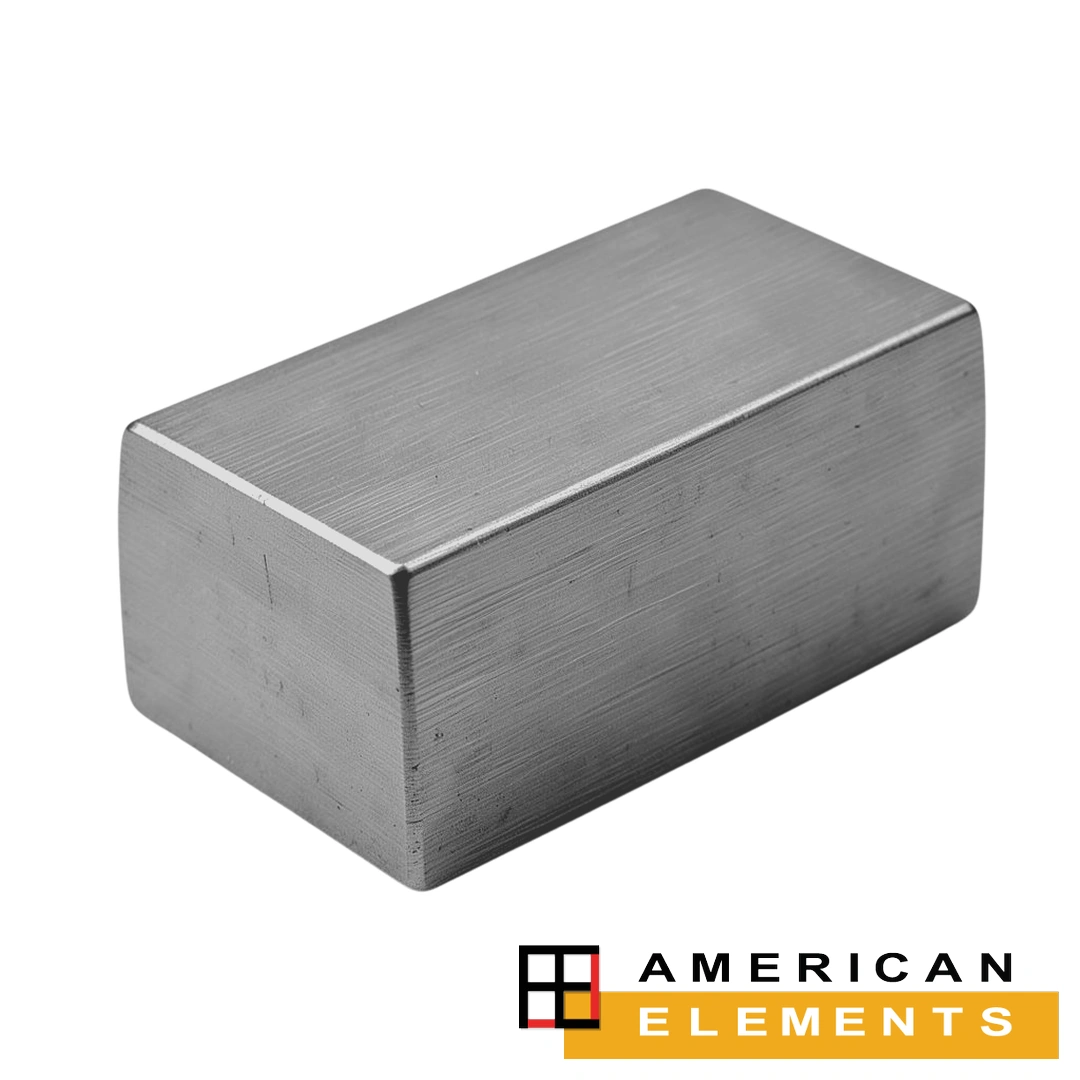
High-purity hafnium ingot
From sub-10nm transistors to neuromorphic computing, Hf and Ta support advanced electronics, AI infrastructure, and aerospace systems.
Building an integrated domestic value chain can deliver significant economic, geopolitical, and industrial benefits.
Thousands of direct and indirect jobs across extraction, refining, and advanced component manufacturing.
At US$12,508/kg, hafnium can generate significantly higher value than exporting raw concentrates.
From ore to semiconductor sputtering targets, each stage can be captured domestically.
Lower dependence on unstable supply regions for defense and semiconductor sectors.
Position Canada as a trusted supplier for G7, NATO, and Five Eyes partners.
Provide ESG-certified alternatives to conflict-mineral exposed supply chains.
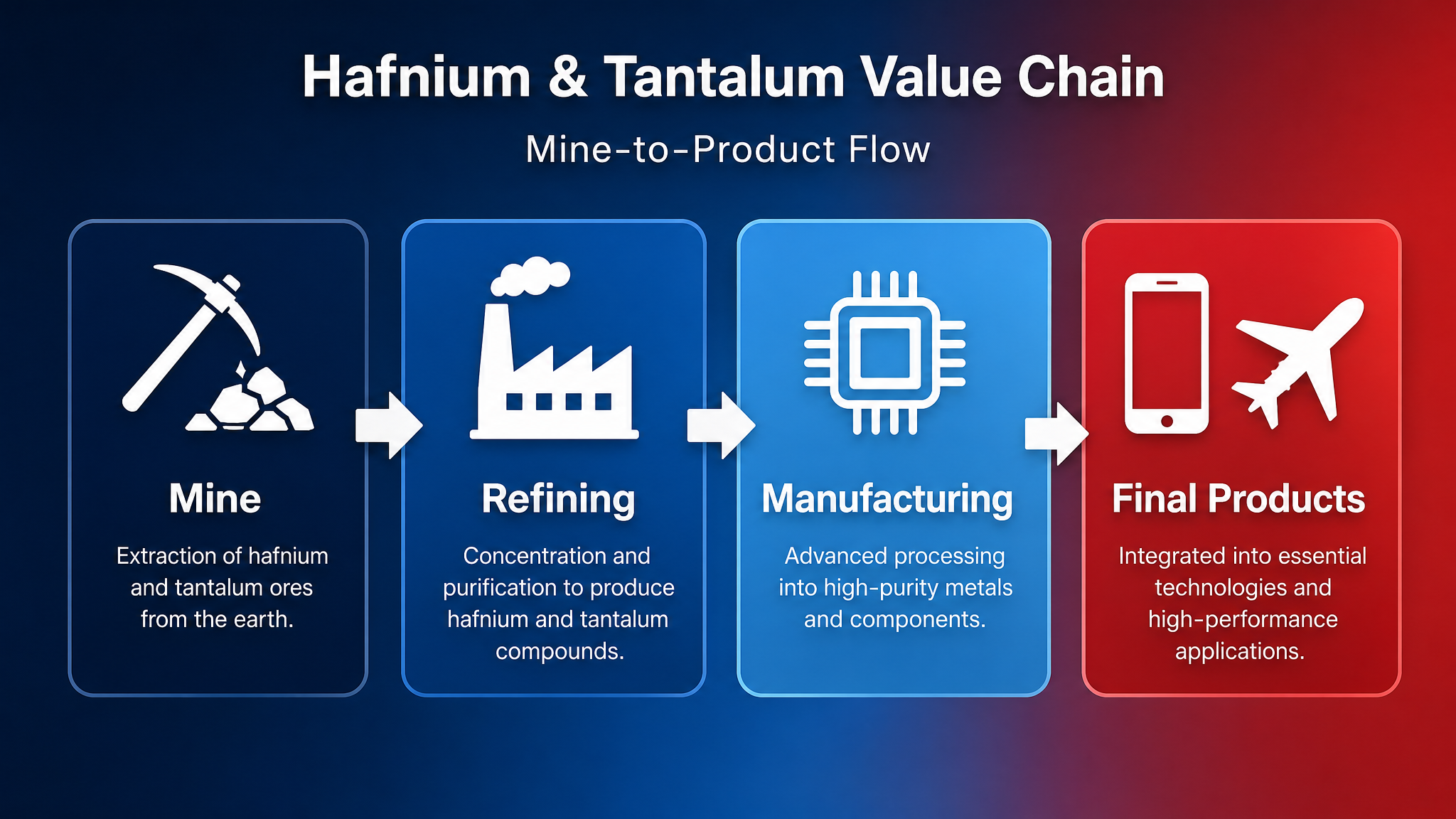
Capturing each stage - extraction, refining, and advanced component manufacturing - maximizes economic value and high-skill employment.
Canada is at a decisive moment and needs coordinated action across policy, financing, and industry execution.
Implement an accelerated permitting pathway for Blue River, Nechalacho/Thor Lake, Strange Lake, and Rose in partnership with Indigenous communities and ESG standards.
Launch a national initiative to fund Zr/Hf separation and Ta refining facilities in Canada, supported by tax incentives and public-private partnerships.
Use critical-minerals capital programs for equity participation, loan guarantees, and long-term offtake contracts.
Expand downstream R&D programs and encourage Canadian semiconductor and aerospace manufacturers to integrate domestically sourced materials.
Position Canadian production as a preferred source for the U.S., EU, and G7 partners across defense and electronics supply chains.
With decisive execution, Canada can turn geological potential into durable economic and geopolitical advantage.
Contact the Government of CanadaFederal contact points relevant to hafnium and tantalum value-chain development in Canada.
Natural Resources Canada - primary contact for strategy, financing, and project development.
cmce-cemc@nrcan-rncan.gc.caGeneral inquiries about mining, materials, and Canadian natural resource policy.
nrcan_questions-questions_rncan@nrcan-rncan.gc.caMedia requests and public communications on critical minerals and national strategy.
media@nrcan-rncan.gc.caBusiness support, innovation programs, semiconductors, and industrial development.
ic.info-info.ic@canada.caConfidence tiers clarify the difference between measured resource data and forward-looking strategic interpretation.
Resource estimates, material-property values, and publicly documented government program structures.
Market growth expectations and value-chain scaling scenarios derived from current industry trajectories.
Timing assumptions on permitting, processing capacity, and geopolitical demand shocks.
Academic, government, and industry sources used in this strategic report.