"The Charter is not an instrument for the aggrandizement of the courts at the expense of Parliament; it is an instrument for national purpose, human dignity and personal freedom."
Why critique these models?
Comparing both charters exposes blind spots so reforms stay grounded in reality, not myth.
The Canadian Charter of Rights and Freedoms (1982) and the U.S. Constitution with its Bill of Rights (1791) are often treated as constitutional gospel. Yet both emerged from specific crises, compromises, and political bargains. Critiquing them is not about tearing them down; it is about exposing blind spots, testing assumptions, and asking who wins—or loses—under each design.
Core Contrast
Canada favors flexible, dialogic rights review. The United States hardwires suspicion of state power into near-absolute protections.
Neither choice is neutral, and each produces its own signature problems.
⚖️Judicial power
🛡️Rights shields
🧭Civic trade-offs
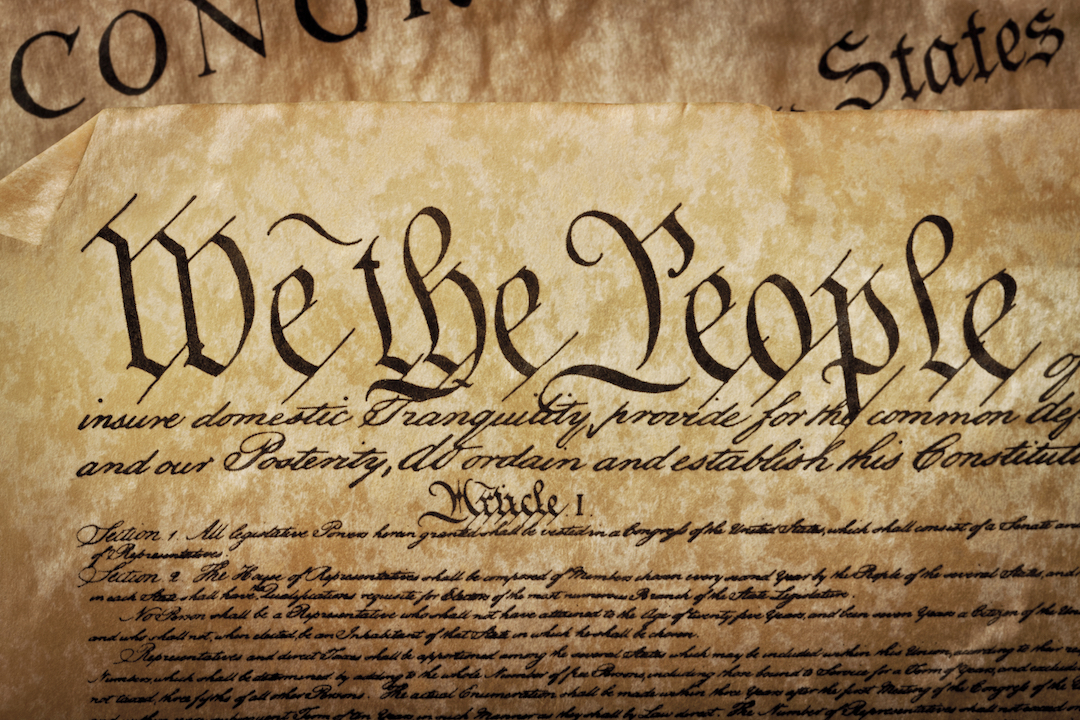
📜Founding texts
1982
Charter entrenched with a built-in override clause (Section 33).
1791
Bill of Rights ratified, locking in rigid, amendment-level protections.
9
Supreme Court justices in each country can tilt national policy for decades.
Why 1982 changed everything
Patriation moved ultimate authority from Westminster to Ottawa and made rights enforceable, not just polite suggestions.
Canada's rights culture rested on British statutes and political goodwill until patriation. The Charter constitutionalized guarantees, required governments to justify limits, and finally made Ottawa—not Westminster—the final word, while still tracing linguistic and due-process DNA back to Magna Carta (1215).
The British North America Act created the Dominion of Canada under U.K. legislation; every constitutional amendment needed British sign-off until 1982.
Prime Minister Diefenbaker's Bill of Rights was only a federal statute—judges could not strike down conflicting laws and provinces could simply ignore it.
Queen Elizabeth II signed the Constitution Act, 1982 in Ottawa, renaming the old BNA Act the Constitution Act, 1867 and replacing Dominion Day with Canada Day.
Section 1 intentionally opens the Charter so every right that follows must pass the "demonstrably justified" test, while Section 33's notwithstanding clause and Section 16.1's bilingual guarantee for New Brunswick were added by amendment.
- Before 1982, rights existed at the pleasure of legislatures; the Charter now binds every government actor and applies to "everyone" on Canadian soil, with citizen-specific rights limited to Sections 3-5.
- John Humphrey of New Brunswick drafted the first version of the Universal Declaration of Human Rights, underscoring Canada's role in international rights discourse.
- Language equality in federal institutions coexists with provincial discretion: only New Brunswick is constitutionally bilingual, while Quebec can legislate primarily in French.
Pressure points in the Canadian model
Flexibility is a feature, but it invites political shortcuts, uneven language rights, and heavy reliance on judges.
1. Negotiable rights: Section 1 and the notwithstanding clause
- Reasonable limits (Section 1): Rights can be restricted if the state proves the limits are justified in a free and democratic society. The Oakes test gives judges expansive discretion, and placing this clause first signals that none of the following sections are frozen for eternity.
- Critique: Protections can feel conditional because liberties shrink incrementally under the banner of public safety or administrative ease.
- Notwithstanding clause (Section 33): Legislatures can shield laws from certain Charter challenges for renewable five-year periods.
- Critique: Majorities gain a constitutional escape hatch, which can undermine minority confidence in the Charter itself.
- Expression, not absolute speech: Section 2(b) protects "freedom of thought, belief, opinion and expression," allowing Parliament to outlaw hate propaganda and incitement. Paired with Sections 7, 9, and 15, it leaves little room for ICE-style mass detentions or discrimination masquerading as free speech.
2. Courts steering politics
- Since 1982, the Supreme Court of Canada has arbitrated controversies over marriage equality, safe-injection sites, assisted dying, and more.
- Critique: Talk of a "government of judges" reflects unease with unelected decision-makers settling seismic social questions.
- Conversely, the Court is accused of timidity on social rights and climate obligations, avoiding rulings that impose positive duties on the state.
3. Balancing individual and collective commitments
- Canada pledges individual freedoms while also entrenching bilingualism, multiculturalism, and Indigenous rights in Section 35.
- Critique: These commitments often collide, so language guarantees can clash with expression or economic freedom.
- Symbolic recognition of Indigenous rights coexists with policies that perpetuate material inequality, raising accusations of constitutional theatre.
- Section 16 guarantees bilingual services from federal institutions, but only New Brunswick (by Section 16.1) is constitutionally bilingual. Quebec can legislate primarily in French and other provinces tailor services to local demographics, making language equity a patchwork.
4. Complexity distancing citizens
- Federal, provincial, territorial, and municipal actors all interact with the Charter, creating a labyrinth of accountability.
- Critique: The harder it is to know who decides what, the easier it is for responsibility to vanish into intergovernmental fog and courtroom proceedings—Parliament literally runs with simultaneous translation headsets so members can follow debates in either language.
5. Due process anchored in international law
- Habeas corpus: Section 10 ensures anyone detained must be told why and allowed counsel without delay, a sharp contrast with U.S. migrants or Patriot Act detainees who can languish without hearings.
- Section 11(g): No one can be found guilty for conduct that was not an offence under Canadian or international law when it occurred, and sentences fall away if Parliament repeals the offence—no retroactive criminalization.
- International commitments: Canada accepts community-of-nations standards, so extradition to face the death penalty now violates Section 12's ban on cruel and unusual punishment unless assurances are given.
- Everyone means everyone: Sections 7 through 15 apply to "every individual" in Canada—citizens, permanent residents, migrants, or detainees—while only Sections 3-5 carve out citizens-only rights like voting.
- Government focus: The Charter restrains public actors; private disputes route through federal or provincial human-rights commissions, creating parallel but complementary enforcement tracks.
Pressure points in the U.S. model
Rigid wording and lifetime judges safeguard some freedoms but make modern problem-solving harder.
1. Ultra-strong rights, brittle flexibility
- The Bill of Rights erects formidable barriers against government action without a general limitations clause like Canada's Section 1.
- Critique: Responding to modern crises—gun violence, disinformation, hate speech—often crashes into constitutional dead ends.
- Efforts to regulate firearms, for example, routinely collide with expansive readings of the Second Amendment.
2. Originalism vs. living constitution
- Interpretive wars pit originalists, who prize founding-era meaning, against those favoring an evolving Constitution.
- Critique: The divide fuels hyper-partisan confirmation battles and makes constitutional rights feel volatile when Court majorities shift.
- Landmark precedents—from abortion to affirmative action—can be overturned abruptly, shaking public trust.
3. Near-absolute free speech
- U.S. jurisprudence shields even deeply offensive or extremist speech.
- Critique: In an unequal media ecosystem, "neutral" speech rules amplify those with money, tech leverage, or coordinated networks.
- Cases like Citizens United v. FEC equate campaign spending with speech, magnifying corporate influence.
4. Missing social rights, entrenched inequality
- The Constitution contains no explicit guarantees to housing, healthcare, or decent work, and courts resist imposing positive duties on government.
- Critique: The framework fiercely guards liberty from the state but offers little protection against market-driven precarity.
- Persistent racial and economic disparities endure despite the 14th Amendment's Equal Protection Clause.
5. A deeper juristocracy
- U.S. Supreme Court justices hold lifetime appointments, extending their influence across generations.
- Critique: Nine unelected individuals can steer national policy for decades with minimal democratic feedback loops.
6. Mobility rights vs. state crackdowns
- Mobility is not explicitly protected in the U.S. Constitution, which leaves room for states exploring travel bans on pregnant people seeking abortions.
- Contrast: Section 6 of the Charter guarantees Canadians the right to enter, remain in, and leave any province, making similar exit controls unconstitutional north of the border.
7. Myth-busting the "pursuit of happiness"
- The famous phrase lives in the Declaration of Independence, not the Constitution, so it carries inspirational weight but no enforceable legal right.
- Implication: Claims to a constitutional "right to happiness" fail in U.S. courts; Canadians instead argue under concrete Charter clauses such as Section 7's security of the person.
Two sides of the same medal
Line up the gains and costs to see how each system trades certainty for flexibility.
Canadian Charter trade-offs
- Upside: Built-in flexibility, cultural pluralism, room for democratic dialogue between courts and legislatures.
- Cost: Rights can feel provisional; minorities depend on political restraint; constitutional literacy remains low.
U.S. Constitution trade-offs
- Upside: Strong symbolic guardrails against state overreach, clarity about certain liberties, slower constitutional drift.
- Cost: Rigid amendment process, policymaking gridlock, and intensified cultural warfare over Court appointments.
Living debates that keep the texts honest
Ongoing conversations in classrooms, courts, and comment threads keep doctrines grounded in daily life.
Public discussions around both documents emphasize that liberties are only as strong as the civic culture that defends them. The themes below capture recurring truths raised by educators, lawyers, and everyday observers steeped in the Charter-versus-Constitution conversation.
- Freedom indices routinely place Canada in the global top tier while warning that democratic backsliding can erode U.S. rankings.
- Federal bilingual guarantees coexist with provincial discretion; simultaneous translation in Parliament keeps debate accessible even when members stick to one language.
- Security-of-the-person litigation now fuels policies on firearms, clean water, and public health, proving the Charter reaches beyond appellate courts.
- Canada exports rights thinking—from John Humphrey's draft of the Universal Declaration to modern treaty acknowledgements—rather than only importing ideas.
- The notwithstanding clause remains a flashpoint, as provincial experiments and strike threats keep citizens alert to its democratic costs.
- Civic literacy efforts stress that rights pair with responsibilities, including vigilance over mobility rights and legacy statutes such as the Indian Act.
Evidence and Reference Framework
Constitutional comparisons are strongest when legal interpretation, historical archives, and measurable outcomes are kept distinct.
Evidence tiers used in this comparison
- Tier A: Constitutional text, binding case law, and official court judgments.
- Tier B: Parliamentary records, commission reports, and official institutional data.
- Tier C: Peer-reviewed scholarship and legal commentary.
- Tier D: Editorial debate and civic discourse used for context, not legal proof.
Interpretation guardrails
- Separate doctrine from political preference when describing outcomes.
- Flag when a claim depends on current court composition.
- Avoid importing modern policy assumptions into historical text without citation.
- Distinguish federal powers from provincial/state implementation variation.
Core sources to anchor further reading
- Constitution Act, 1867 and Constitution Act, 1982 (including the Canadian Charter of Rights and Freedoms).
- U.S. Constitution and Bill of Rights, with key Federalist Papers context.
- Supreme Court of Canada and U.S. Supreme Court official judgments and docket archives.
- Library of Parliament, Department of Justice Canada, and U.S. Congressional Research Service constitutional references.
- Freedom House and comparative democracy datasets for civic-rights trend context.
No neutral blueprint
Every constitutional choice distributes power; naming the trade-offs keeps both democracies honest.
Neither framework is a neutral catalogue of abstract rights. Each is a bold political wager about whom to trust, which harms to prioritize, and how change should happen.
Canada embraces moderation and compromise even if it blurs the edges of certain liberties. The United States entrenches suspicion of government, even if that slows reform and deepens inequality.
Asking tough questions of both texts keeps civic imagination alive: every constitutional choice distributes power. The debate is the point.
The Charter protects freedom of expression, not unfettered speech, so hate propaganda and incitement laws survive judicial scrutiny when they prevent tangible harm.
Medical autonomy cases—from abortion access to medical assistance in dying—turn on Section 7, which lets courts invalidate statutes that endanger bodily integrity without crafting new legislation.
Equality rights now explicitly cover grounds such as sexual orientation, gender identity, and creed, illustrating how jurisprudence keeps widening the definition of equal protection.
Canada acknowledges that domestic law sits alongside international commitments; retroactive offences are barred, and withdrawal from global courts is not used to evade accountability.
Detention triggers immediate rights to reasons and counsel, limiting ICE-style dragnets and Patriot Act–style indefinite holds that bypass judges.
Land acknowledgements and treaty references remind audiences that "peace, order, and good government" includes honoring Mi'kmaq and other nations as past, present, and future caretakers.
Placing the limitations clause up front signals that rights evolve with evidence; unlike the U.S. Second Amendment, protections are not frozen in a 1790s snapshot.
Post-1982 tweaks—such as entrenching New Brunswick's bilingual status and revising denominational-school clauses—show the Constitution can adapt without Westminster's permission.
People cannot be convicted for yesterday's conduct if it wasn't illegal at the time, and sentences fall away when an offence is repealed, reinforcing trust in the rule of law.