
Grounding science
The Science of Grounding
Understanding the electrical contact between your body and the Earth.
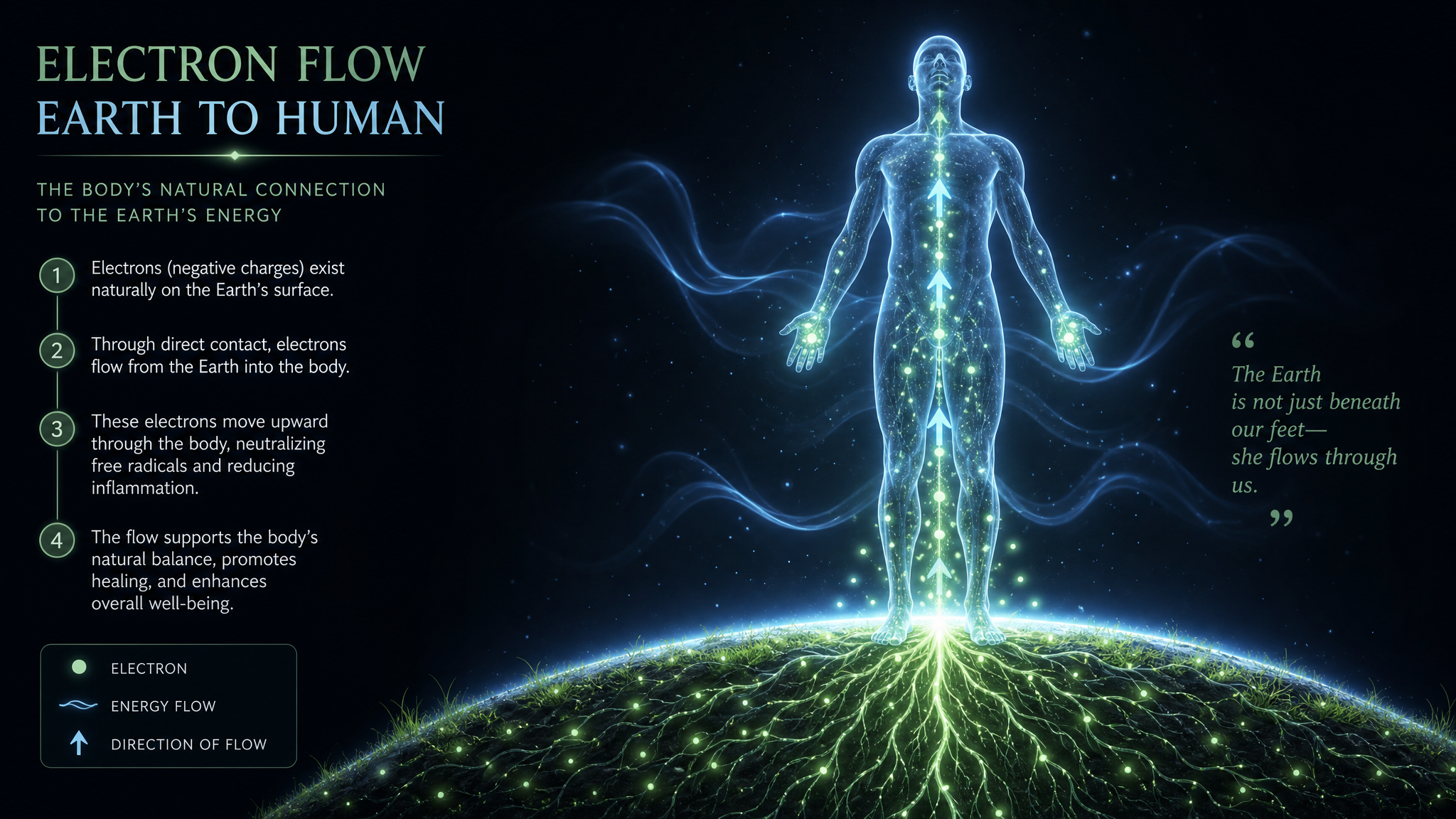
The Earth's surface carries an overall negative electrical charge, continuously maintained by global thunderstorm activity: the global atmospheric electrical circuit. This surface acts as a vast reservoir of free, mobile electrons.
The human body is electrically conductive. When the skin, or a conductive sole, makes direct contact with the ground, the grounding hypothesis proposes that electrons from the Earth may migrate into the body and behave as antioxidants.
Several pilot studies have observed effects associated with grounding: normalization of cortisol rhythm, improved heart rate variability, reduced blood viscosity, and lowered inflammatory markers. These findings are encouraging but remain preliminary.
E
Electron reservoir
The Earth's surface is negatively charged and continuously replenished by global thunderstorm activity.
O
Antioxidant hypothesis
Free electrons may neutralize free radicals, potentially reducing oxidative stress and inflammation.
R
Emerging research
Around twenty peer-reviewed studies exist, mostly small in scale. Large randomized trials are still needed.
Ground shares science-communication content. Grounding is a wellness practice: it does not replace medical advice or treatment.
Conductive sole
How It Works
A discreet sole architecture creates a continuous electrical path from foot to ground.
Ground soles integrate a network of conductive carbon fibers running through their full thickness, creating an electrical path between the sole of your foot and the ground surface.
Unlike conventional synthetic soles that electrically insulate the foot, this approach allows electron flow while preserving daily comfort and protection.
Conduction relies on natural moisture and low-resistance materials. Contact is strongest on damp natural ground such as grass, soil, sand, and unpainted concrete, and weaker on dry insulating surfaces.

1
Contact
Your foot rests on an insole made of natural conductive materials.
2
Transmission
Carbon fibers pass through the midsole and carry electrons through the stack.
3
Connection
The conductive natural-rubber outsole touches the ground and closes the circuit.
Craftsmanship
Artisanal Craftsmanship
Noble materials for a shoe that respects the Earth.

Each pair of Ground is hand-assembled with materials selected for quality, durability, and natural conductivity. The design favors traceable supply chains and lower-impact processes.
Vegetable-tanned leather
Chrome-free tanning using tannins from oak and chestnut bark.
Natural rubber
Conducts electrons better than insulating synthetic elastomers.
Carbon fibers
Ultra-thin conductive network integrated into every layer of the sole.
Natural cork
Thermoregulating, lightweight, and naturally antibacterial insole material.
Studied benefits
The Studied Benefits
What preliminary research associates with reconnecting to the Earth.
The effects below come from small pilot studies. They describe research avenues, not promised outcomes.
Scientific references
Peer-Reviewed References
The available evidence is promising but still limited: small cohorts, sometimes subjective measures, and a need for large randomized trials.
Disclaimer
Grounding is a complementary wellness practice. It is not approved as a medical treatment by the FDA or health authorities. People with a pacemaker or implanted device, or on blood-thinning medication, should consult a physician before practicing. Ground makes no therapeutic claims.