Robot, vision stack, biological construct.
The original Next.js portal presents a full design-history style reference. This static version keeps the main technical structure: the robotic arm system (RAS), the bio-engineered hair follicle (BHF), KPIs, standards, and cross-system specifications.


Key performance parameters
Aggregate metrics from the RAS and BHF subsystems, preserved from the project data layer.
Autonomous robotic implantation platform
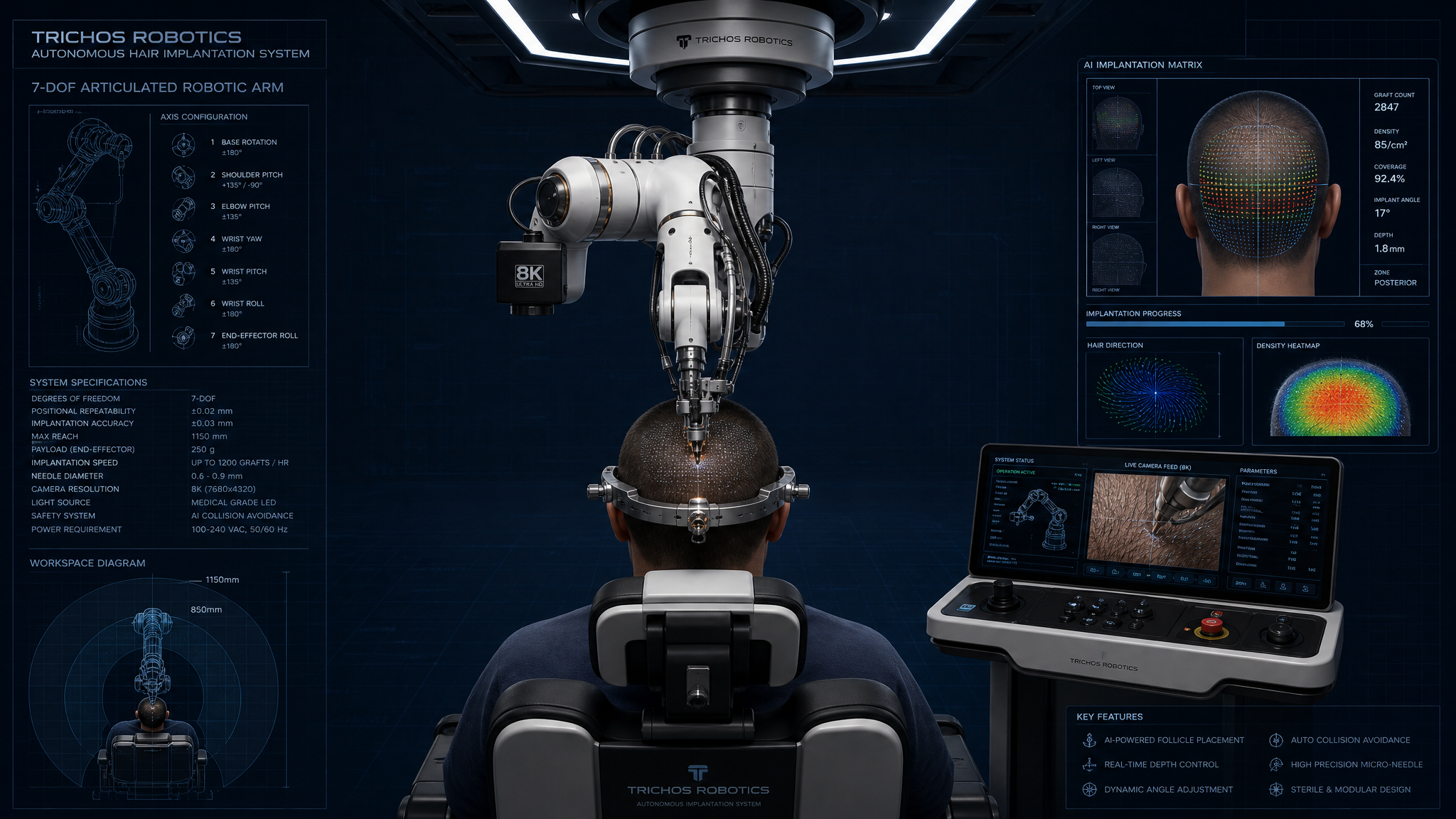
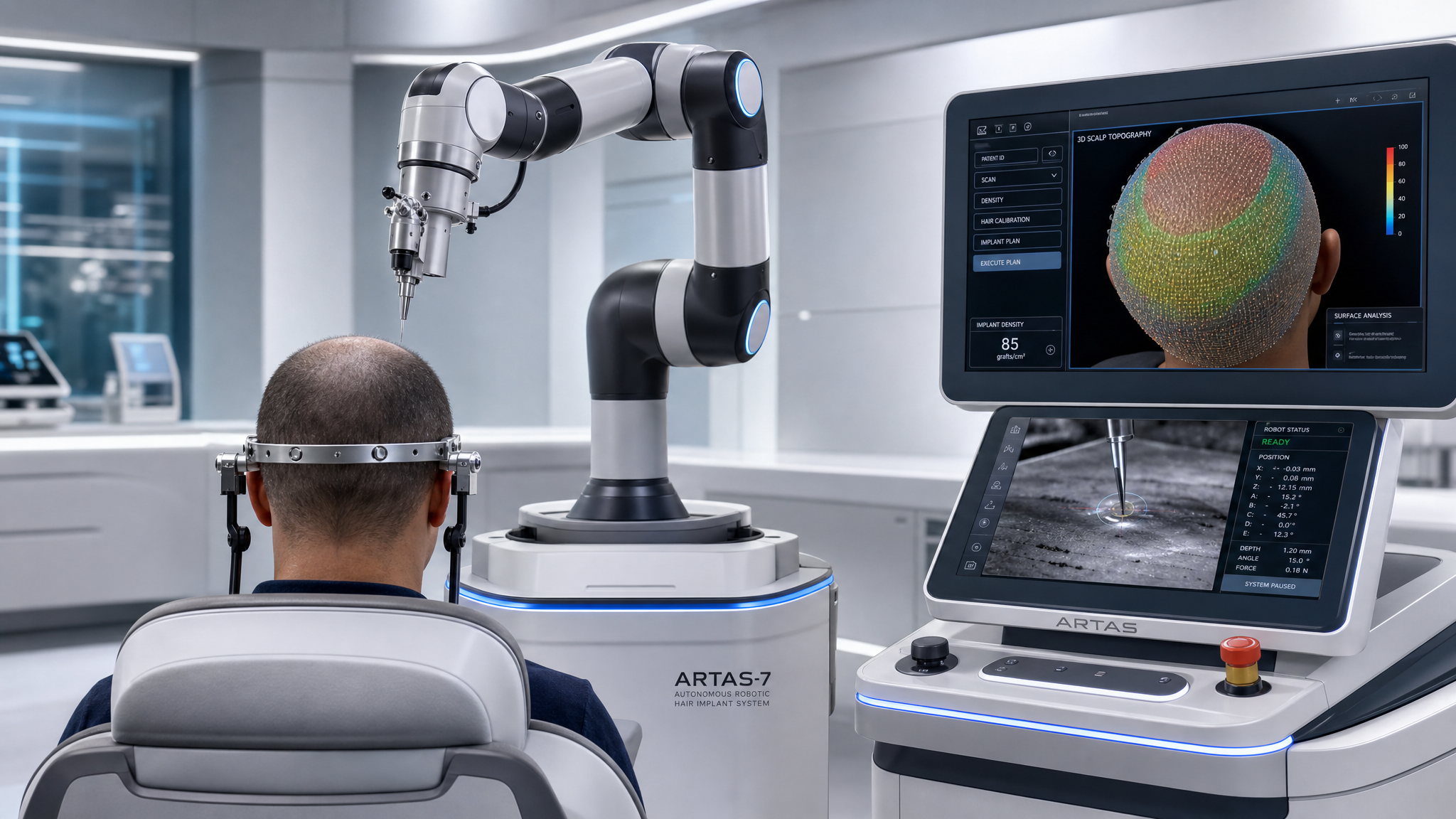
Closed-loop surgical platform combining a 7-DOF manipulator, force-feedback insertion control, 8K and ToF LiDAR perception, AI follicle classification, sterile cartridge handling, and a safety stack aligned to medical-device standards.

RAS root facts
7-DOF surgical manipulator
Redundant 7-DOF kinematic chain with harmonic-drive joints, output-side absolute encoders, and sub-50 um Cartesian repeatability in a constrained cranial workspace.
Force-feedback micro-actuation
Distal voice-coil actuator and 6-axis force/torque sensor control insertion depth, scalp preload, and force-mode handoff.
Fixation, optics, and AI matrix
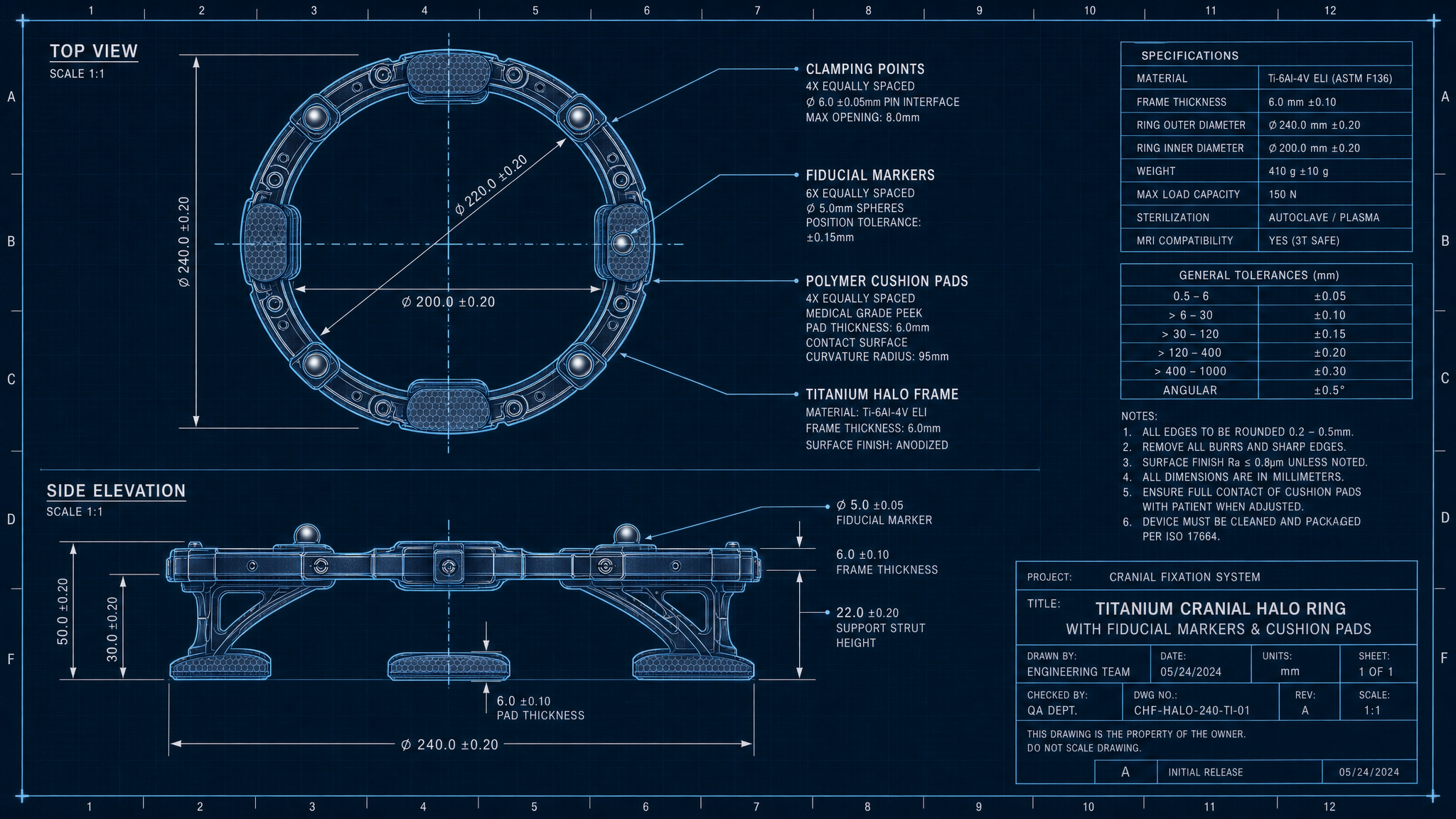
A titanium cranial fixation halo establishes a stable patient frame; 8K optics and ToF LiDAR generate scalp maps; AI models classify follicular units and emit the 3D implantation matrix.


Needle cartridge, safety, sterility, service
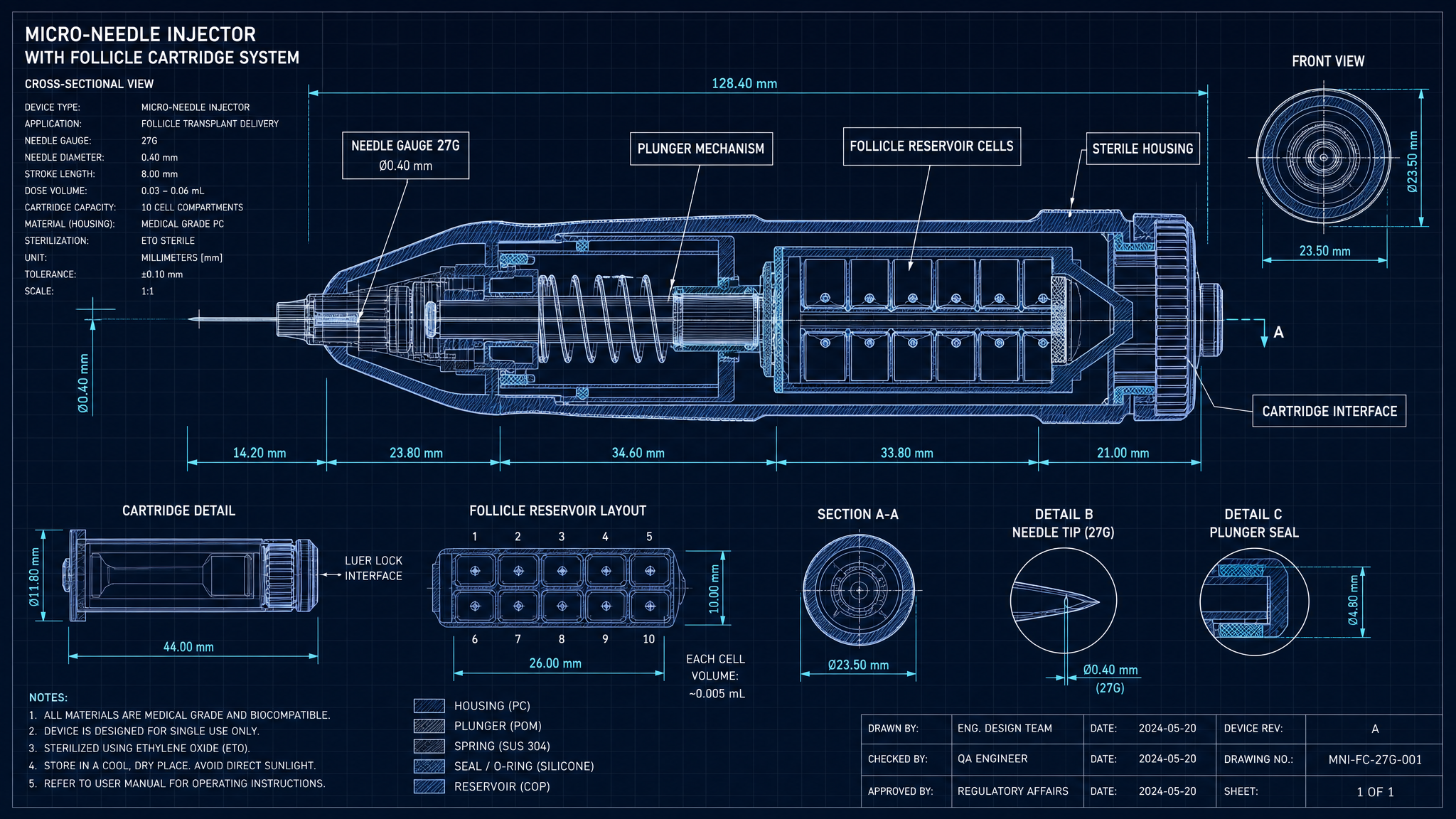
Single-use sterile cartridges interface with the force-feedback actuator. The safety layer uses dual-channel controllers, E-stop relays, collision monitoring, and sterilization workflows split by component class.

Autologous follicle construct and scaffold program
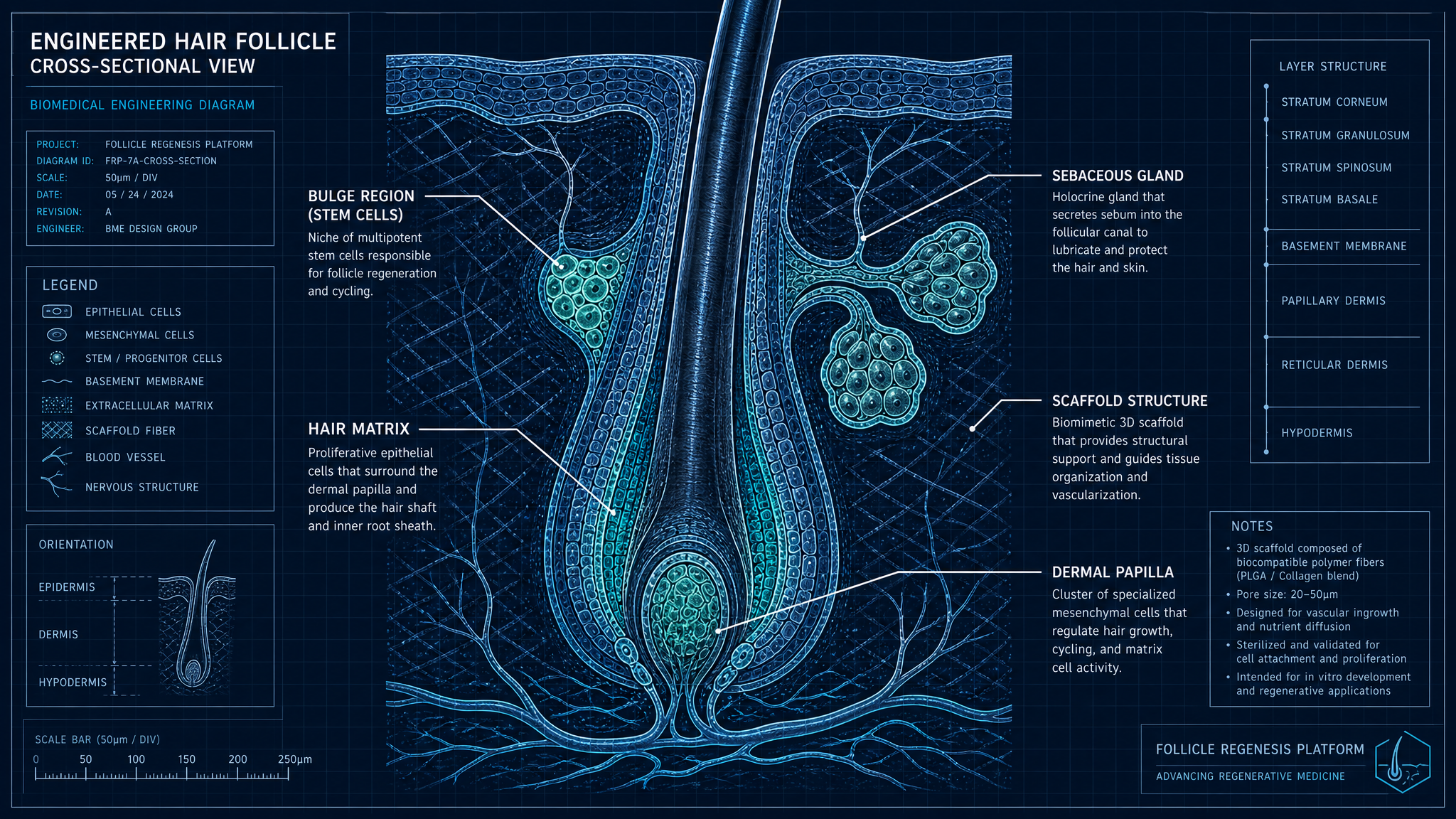
The BHF subsystem describes donor-derived epithelial stem cells and dermal papilla spheroids assembled on a gradient-stiffness PLGA/PCL micro-scaffold in crosslinked hyaluronan hydrogel, with local angiogenic and immunomodulatory release.
BHF root facts
Bulge stem cells and dermal papilla signaling
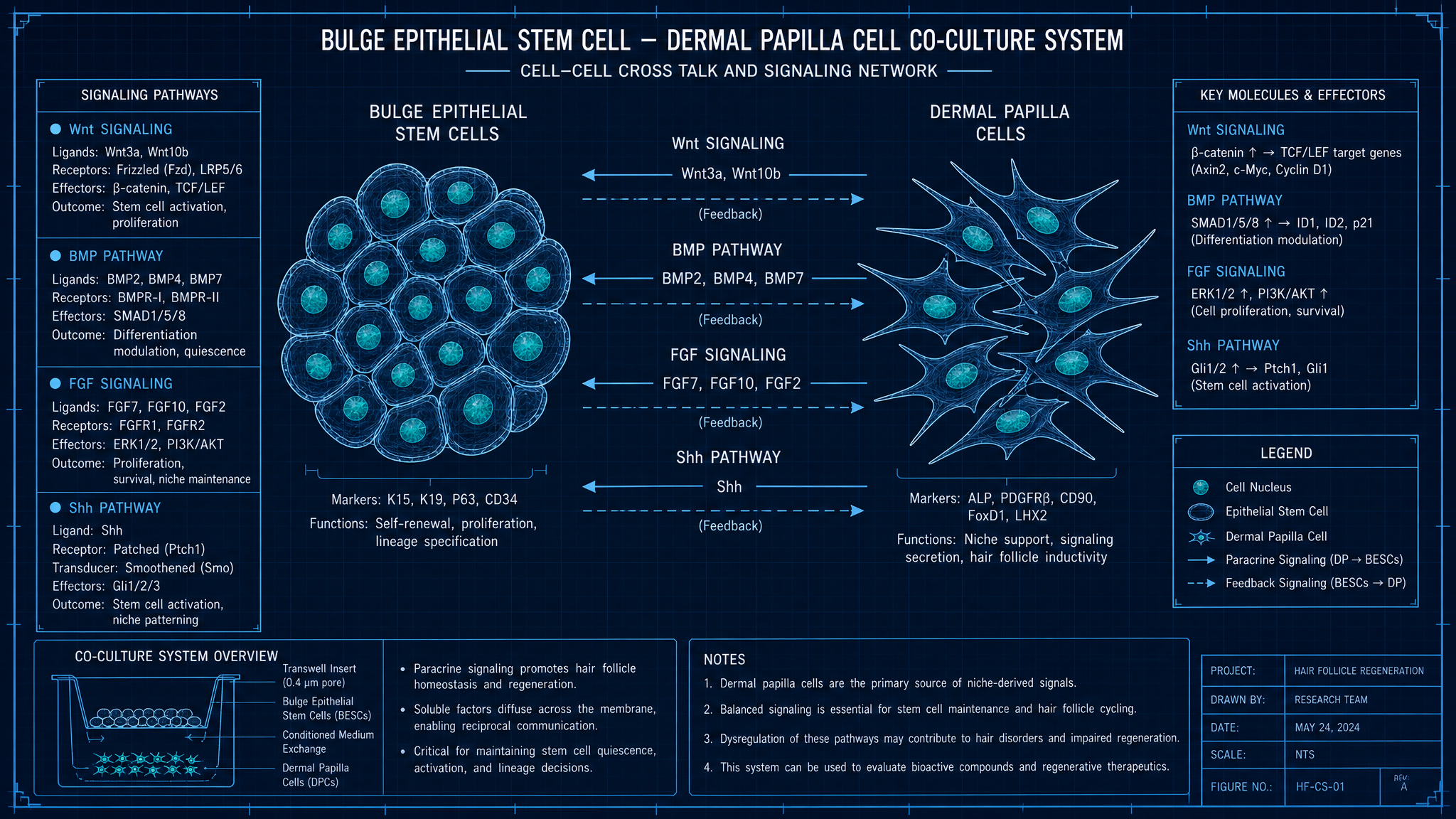
Autologous epithelial bulge cells and dermal papilla cells are expanded under defined culture conditions. DP cells are preserved as 3D spheroids to maintain inductive markers such as ALP, versican, and corin.
Co-culture and gradient scaffold
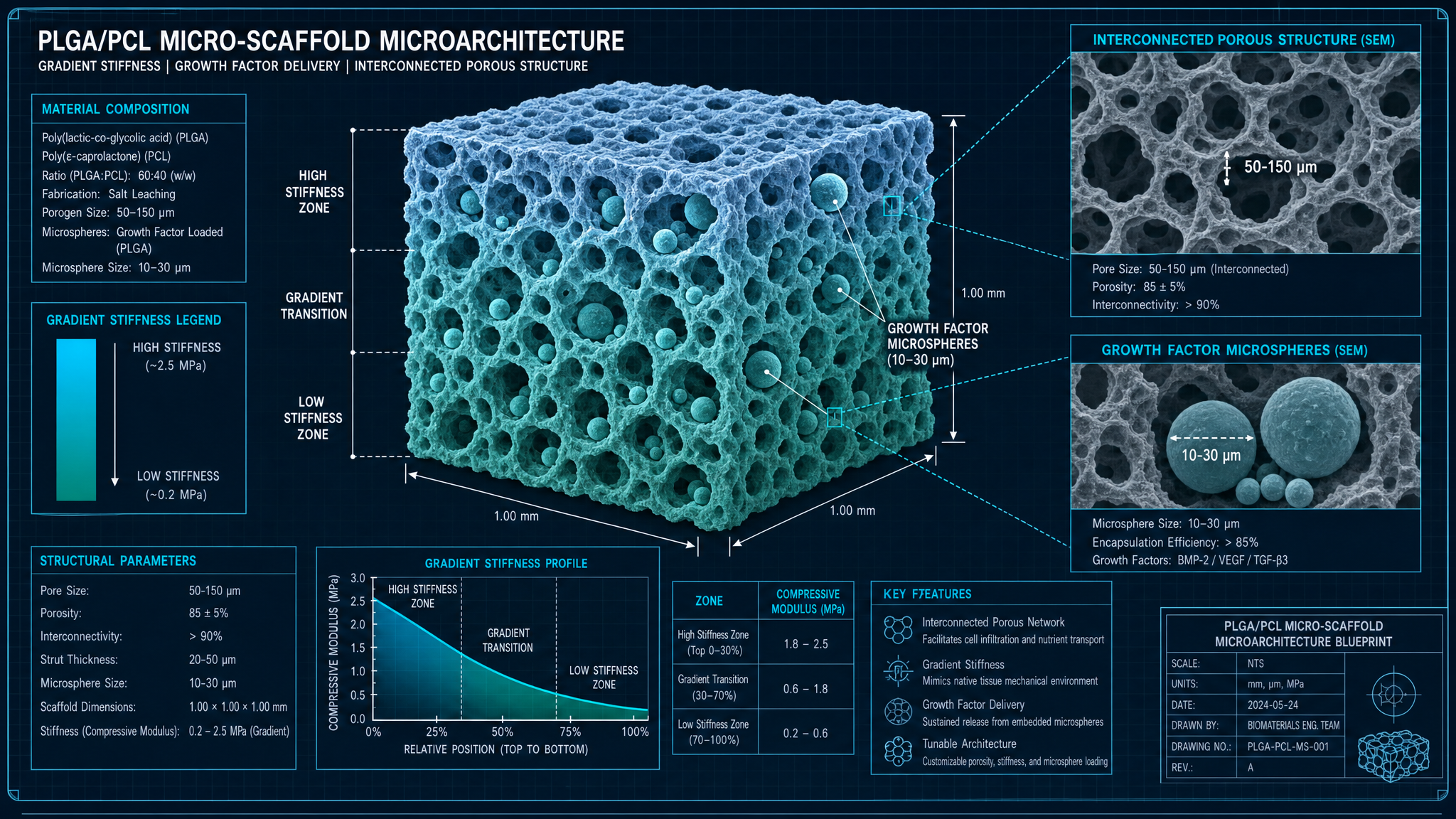
Layered epithelial-mesenchymal aggregates are tuned through Wnt activation, BMP suppression, and FGF signaling, then supported by a melt-electrowritten scaffold with a native-like stiffness gradient.
Hydrogel, growth factors, integration, compatibility
The construct uses MeHA hydrogel, VEGF/PDGF/TGF-beta/IL-10 microspheres, and an implantation timeline that targets capillary sprouting, anastomosis, perfusion, and first shaft emergence by the late first month.
Combined specification index
A condensed table of the highest-signal parameters from the RAS and BHF systems. The original portal contains a deeper per-component matrix; this page preserves the essentials for static browsing.
| Subsystem | Parameter | Value | Note |
|---|---|---|---|
| RAS-01 | Degrees of freedom | 7 | Redundant S-R-S manipulator chain |
| RAS-01 | Cartesian repeatability | +/-50 um | Full load, ISO 9283 style validation |
| RAS-02 | Force resolution | 5 mN | Fz axis at needle interface |
| RAS-04 | Optical resolution | 8192 x 4320 | 33 MP global-shutter class sensor |
| RAS-05 | AI latency | 60 ms | TensorRT FP16 inference target |
| RAS-06 | Needle gauge | 27 G | Thin-wall implanter needle |
| RAS-07 | Safety target | PL d | ISO 13849-1 with HFT = 1 |
| BHF-01 | Passage limit | P4 or lower | Limits clonogenic drift |
| BHF-03 | Aggregate composition | 8-10k eHFSC + 1 DP spheroid | Layered epithelial-mesenchymal organoid |
| BHF-05 | Scaffold size | 0.9 x 4 mm | MEW PLGA/PCL lattice |
| BHF-06 | Local VEGF target | 50-100 ng/mL | Day 3-10 angiogenic window |
| BHF-07 | First shaft emergence | 26.4 +/- 1.8 d | Large-animal preclinical target from source data |