Eight domains, one physics question
The project synthesizes neuroscience, RF safety, satellite link budgets and BCI progress to separate demonstrated clinical science from speculative claims.
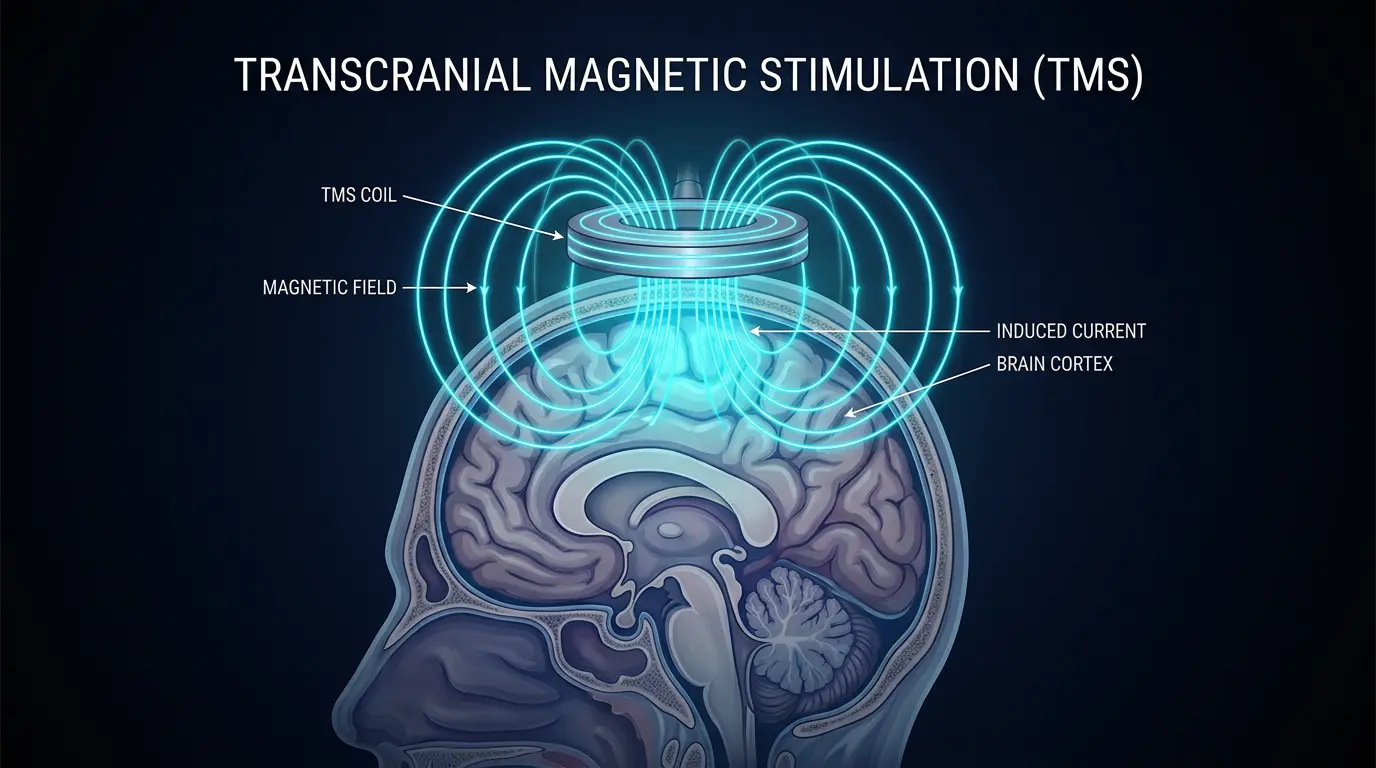
Neuromodulation
TMS, tDCS, tACS, DBS and focused ultrasound show that neural activity can be shaped, but only with close contact, implanted electrodes or controlled acoustic coupling.
1.5-3 T TMS1-2 mA tDCSFUS depth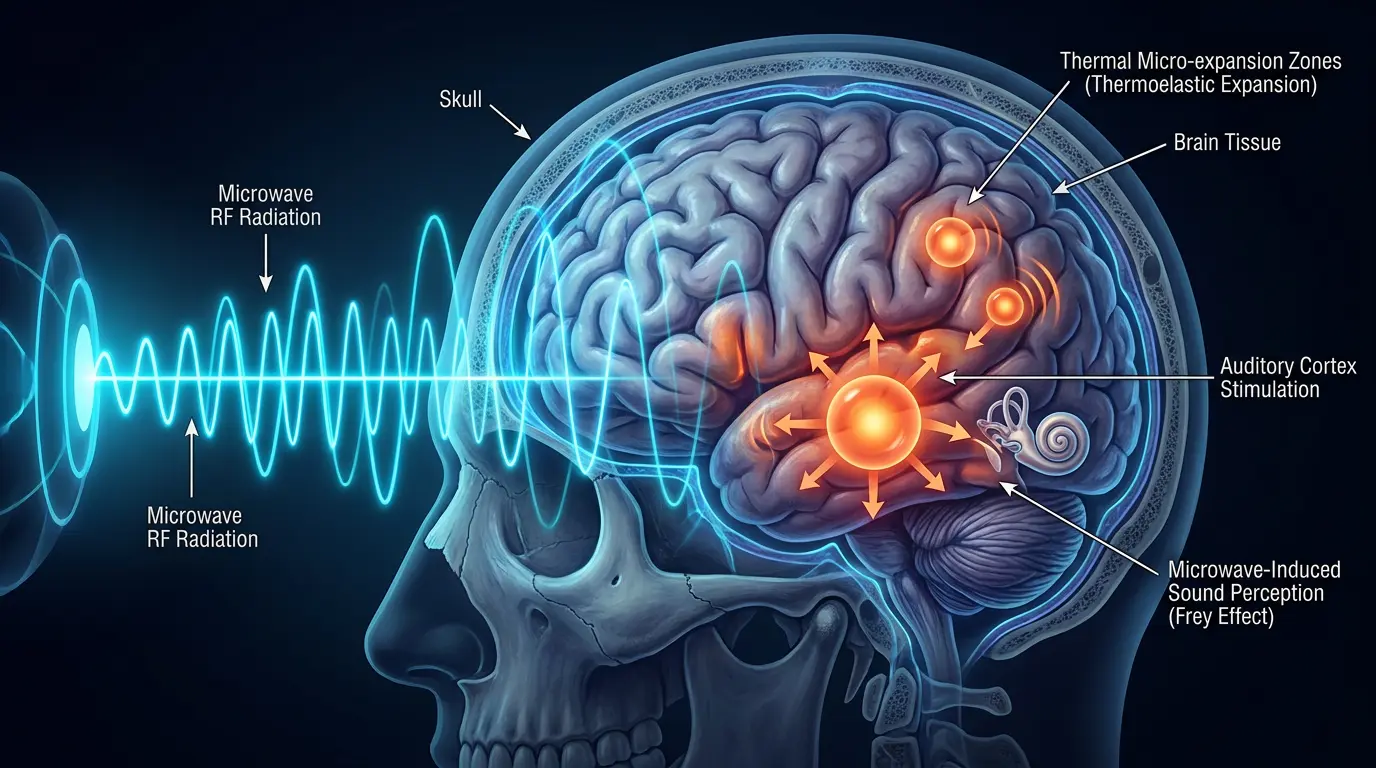
Electromagnetic biology
RF tissue interaction is quantified through SAR, heating thresholds and the Frey auditory effect, which is real but requires pulse energy far above satellite signal levels.
SARFrey effectThermoelastic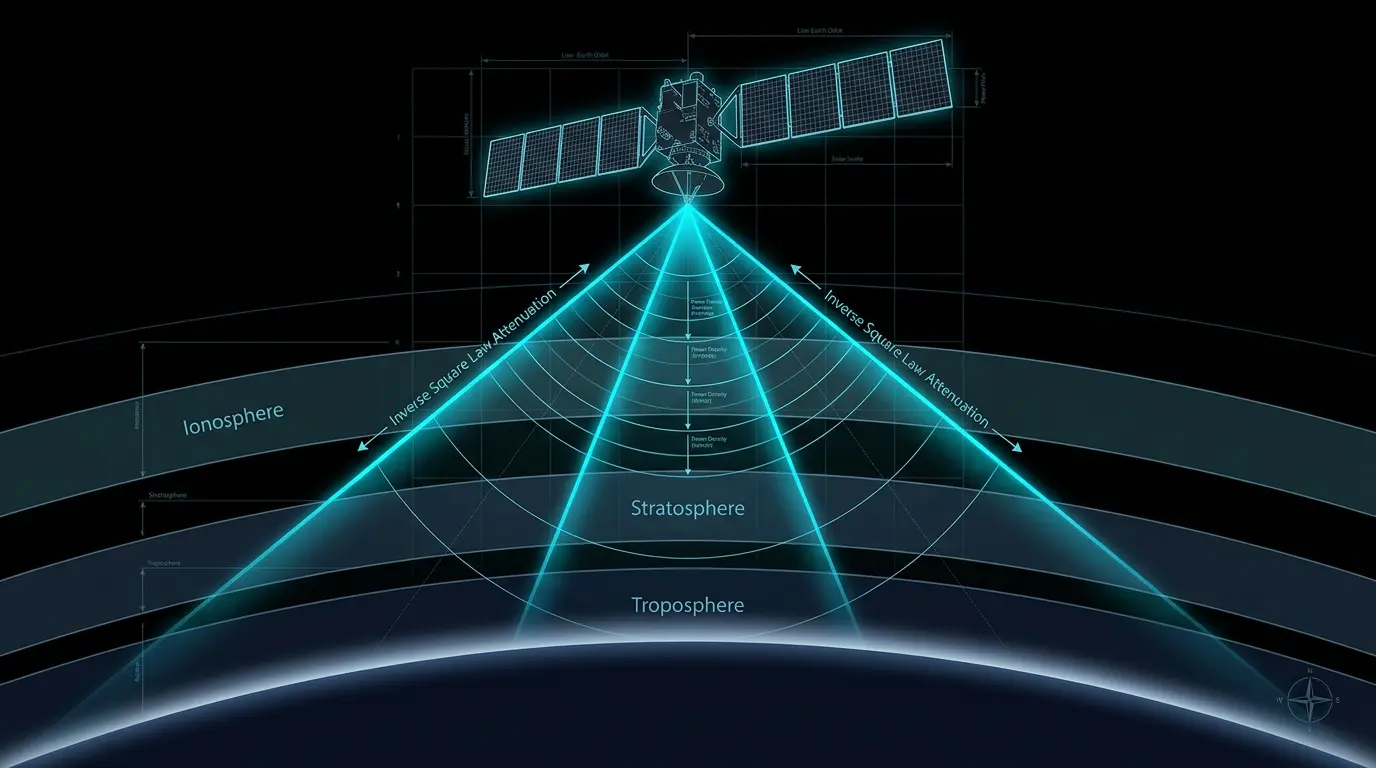
Satellite signal physics
Modern constellations deliver data efficiently by using weak signals and sensitive receivers. They are not energy-delivery systems.
Ku/Ka bandPath lossEIRP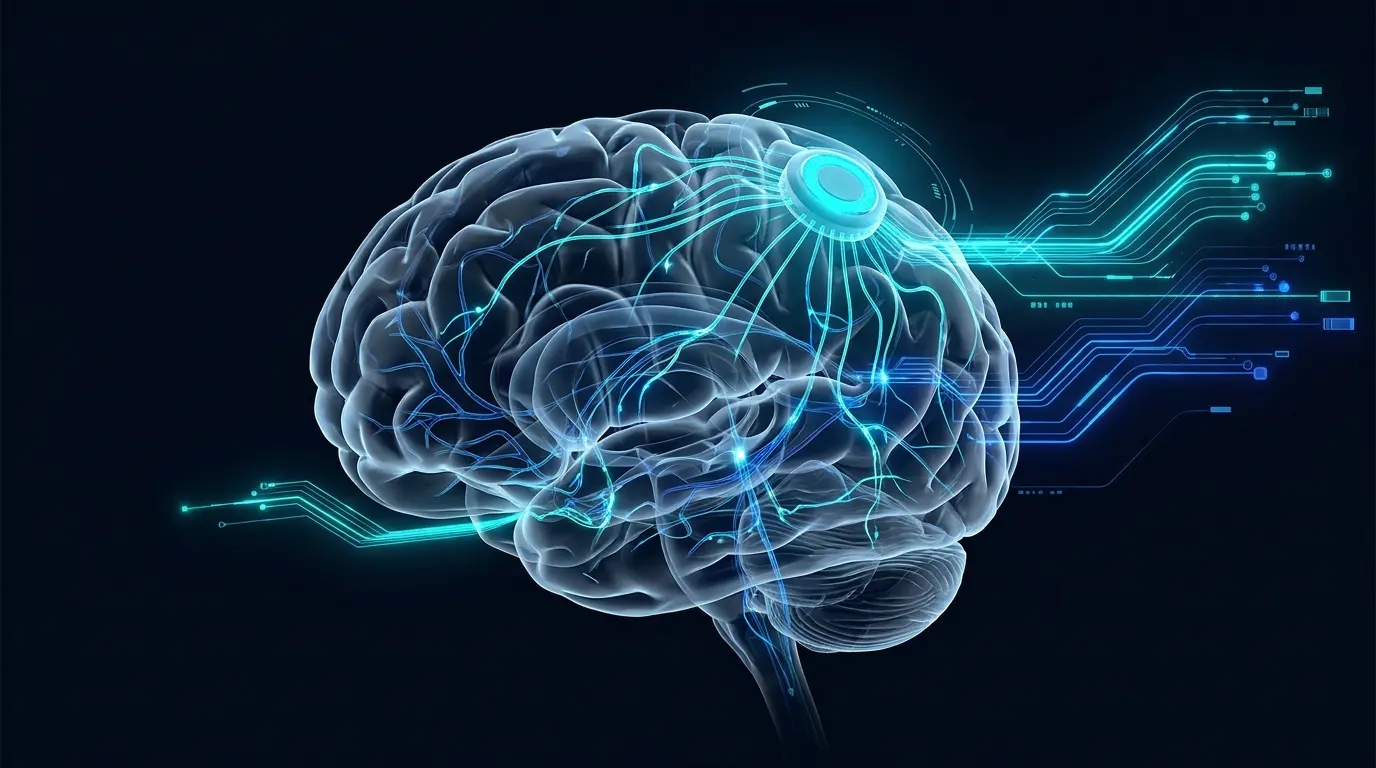
Brain-computer interfaces
BrainGate, ECoG systems and Neuralink-like implants demonstrate direct neural recording, cursor control and speech decoding through local electrodes and signal processing.
96 electrodes1,024 electrodes62 WPM
Satellite architecture
A hypothetical neural-energy constellation would require impossible apertures, power levels and coherence across enormous numbers of satellites.
500,000+ hypothetical170 dB loss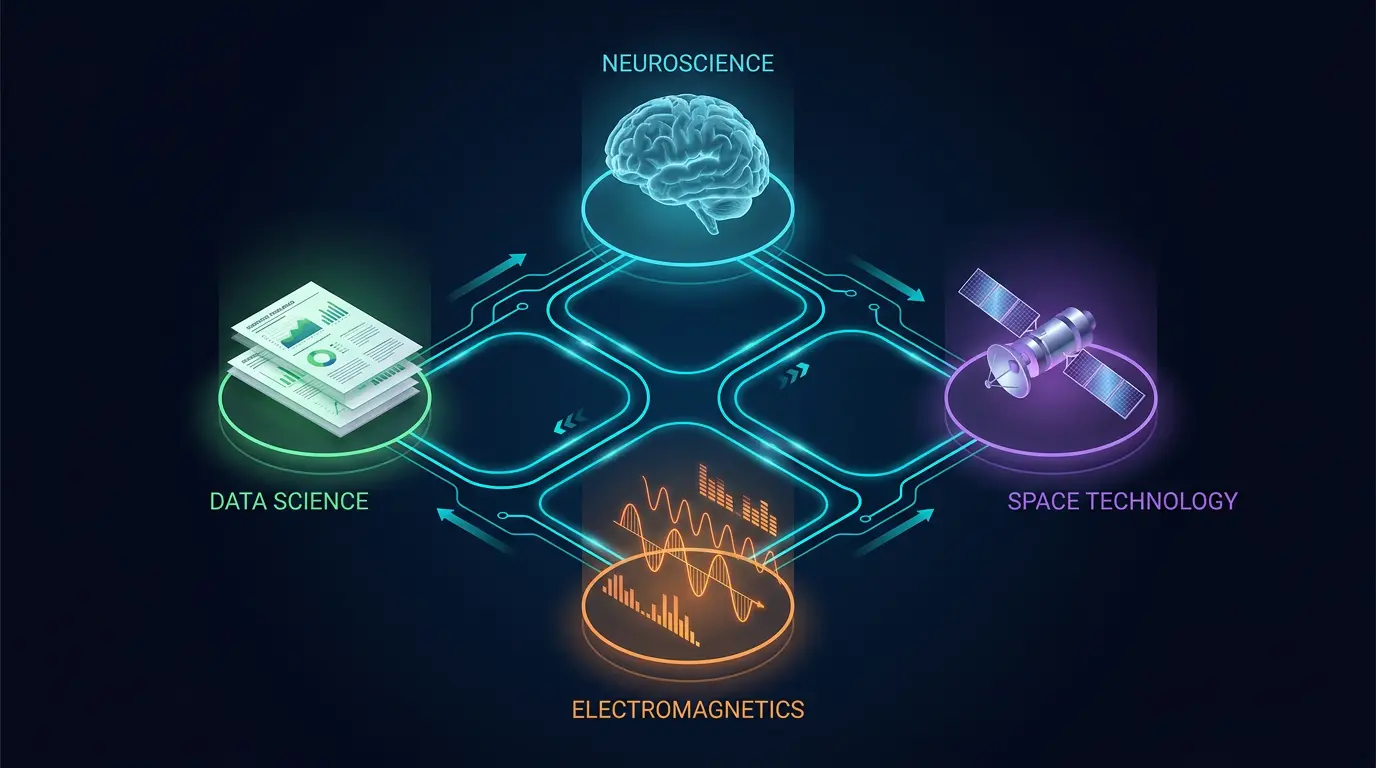
Methodology
The source project uses a narrative review with peer-reviewed and institutional references, then tests claims against quantitative physics constraints.
70 referencesNot clinical adviceWhat actually works in the brain
Demonstrated neuromodulation technologies work because the source is close to tissue or implanted inside the body.
Contact and proximity dominate
TMS uses a coil on the scalp and still reaches only superficial cortex at standard depths. tDCS spreads weak current through scalp electrodes. DBS reaches deep targets only by surgical implantation.
Precision comes from coupling
Focused ultrasound can reach deeper tissue non-invasively, but it relies on acoustic focusing through the skull, not a distant RF link. The practical lesson is that biological effects need local delivery and calibrated dosimetry.
RF effects are measurable, not magical
The project distinguishes thermal RF absorption, proposed non-thermal mechanisms, and the Frey effect from unsupported claims of precise remote control.
The Frey effect matters, but it does not imply satellite control
Pulsed microwaves can create perceived clicks through thermoelastic expansion of tissue. That is a real biophysical mechanism. It is not direct thought insertion, and it still requires pulse energy densities dramatically above ordinary satellite communication signals.
Communications satellites deliver information, not dose
Satellite systems maximize detectable data throughput while minimizing power density at the ground. Their received signals are intentionally tiny.
Real power budgets
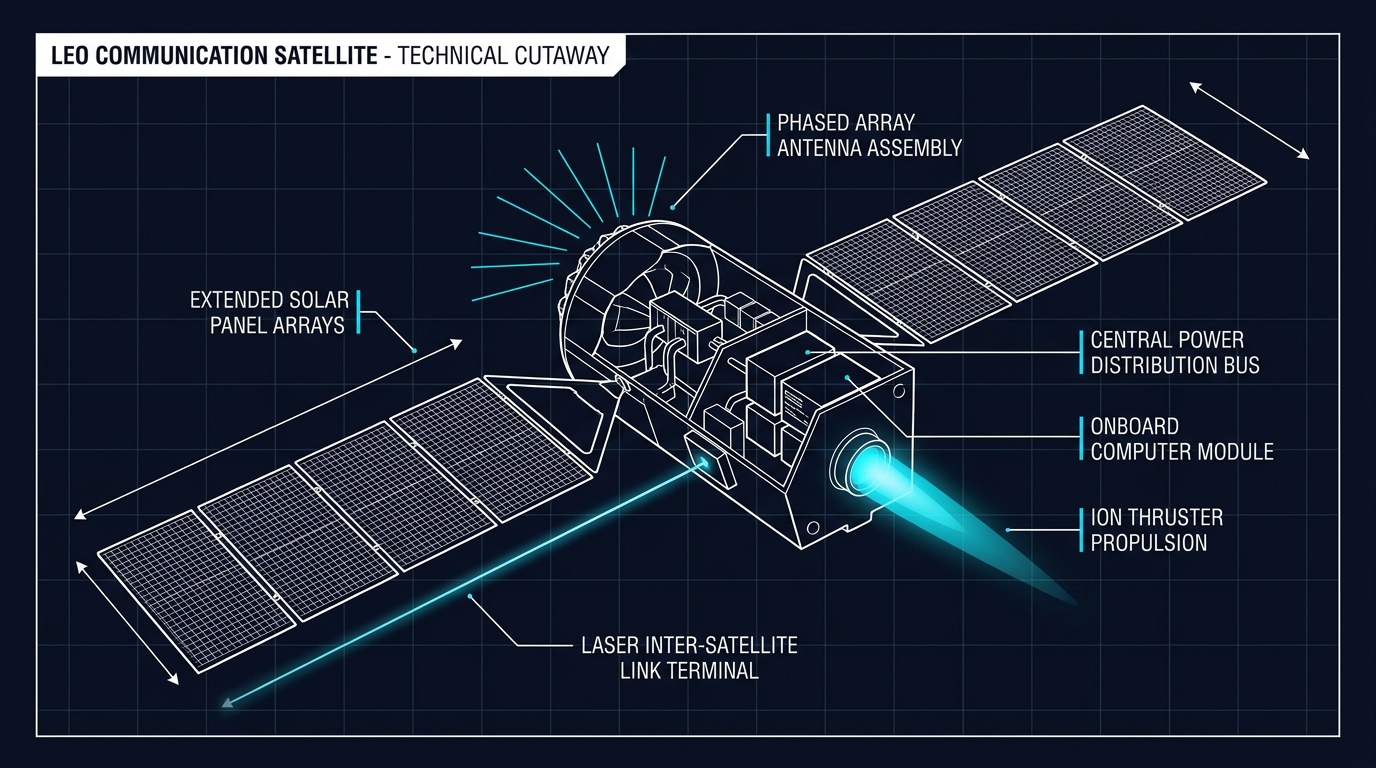
A Starlink-class spacecraft may generate about 10-20 kW from solar arrays, but only a small portion becomes RF output. Typical total RF transmission is on the order of tens of watts, with narrow beams and regulatory limits.
~40 W RF66.89 dBW max EIRP25 ms LEO latencyFree-space path loss
At hundreds of kilometers, signal strength collapses with distance squared. Ku-band and Ka-band links also face rain, atmospheric and pointing losses. Beamforming helps communication but cannot overcome energy conservation.
| System | Orbit | Altitude | Primary role |
|---|---|---|---|
| Starlink | LEO | ~550 km | Broadband data |
| GPS | MEO | 20,200 km | Navigation timing |
| OneWeb | LEO | 1,200 km | Broadband data |
| Amazon Kuiper | LEO | 590-630 km | Broadband data |
Neural control is local, decoded and clinical
The BCI chapters show real progress: cursor control, robotic arm operation, tactile feedback and speech decoding. These systems require implanted or surface electrodes and consented clinical protocols.
BrainGate
The Utah Array records activity from motor cortex through 96 microelectrodes, enabling cursor and robotic control for people with paralysis.
96 channels30 kHz samplingNeuralink-class implants
Flexible threads and wireless telemetry increase channel count and reduce tethering, while still depending on surgery, local electronics and calibration.
1,024 electrodesBLE telemetrySpeech BCIs
Recent systems decode attempted speech with language-model assistance, reaching reported performance around 62 words per minute in research settings.
62 WPMNeural decodingThe physics conclusion is negative
The source project tests the direct satellite-to-brain premise against power density, diffraction, skull attenuation, orbital motion and thermodynamics.
Scientific conclusion
Direct neuromodulation from satellite is not a plausible engineering target. The weakest EM biological thresholds remain many orders of magnitude above satellite communication power densities, and millimeter-scale neural targeting is incompatible with diffraction from orbit. This is a physics limit, not a missing product feature.
| Quantity | Approximate value | Interpretation |
|---|---|---|
| TMS near coil | ~10^7 W/m2 | Strong local field, centimeter-scale source |
| Frey threshold | ~40 uJ/cm2 per pulse | Auditory perception via thermoelastic expansion |
| Satellite ground signal | ~10^-10 W/m2 | Detectable by receivers, not a biological dose |
| Power gap | ~10^17 | Fundamental mismatch for direct satellite neuromodulation |
Speculation clearly separated from evidence
The project explores hypothetical paths only as academic thought experiments, not as claims that remote satellite neuromodulation exists.
Implanted or nanoscale relays
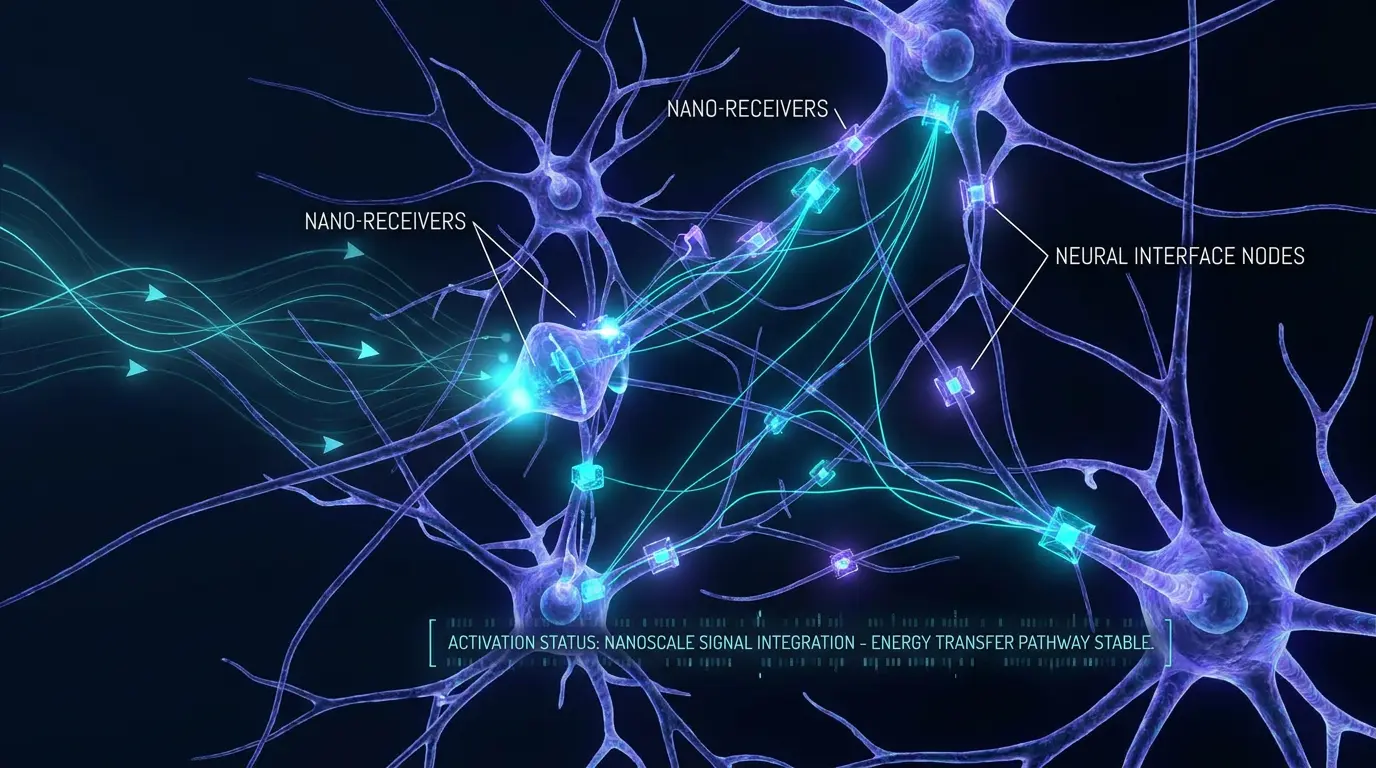
The most plausible future route would use local receivers or implants that convert a communication signal into local stimulation. The satellite would carry data, not deliver neural energy.
SpeculativeBiocompatibility barrierEthics and boundaries
Any future neural interface raises consent, privacy, cybersecurity, clinical governance and civil-rights questions. The safe framing is assistive medicine and transparent research, not covert influence.
ConsentMedical oversightSecurity1961 - Frey effect
Pulsed microwave auditory perception becomes a key demonstration of RF-to-biology interaction.
1985 - Human TMS
Barker and colleagues demonstrate non-invasive magnetic stimulation of human motor cortex.
2004 onward - BrainGate
Invasive BCI systems show direct neural decoding for cursor, robotic and later speech applications.
2020s - Mega-constellations
LEO broadband constellations sharpen the public question, but their link budgets reaffirm the power-density gap.