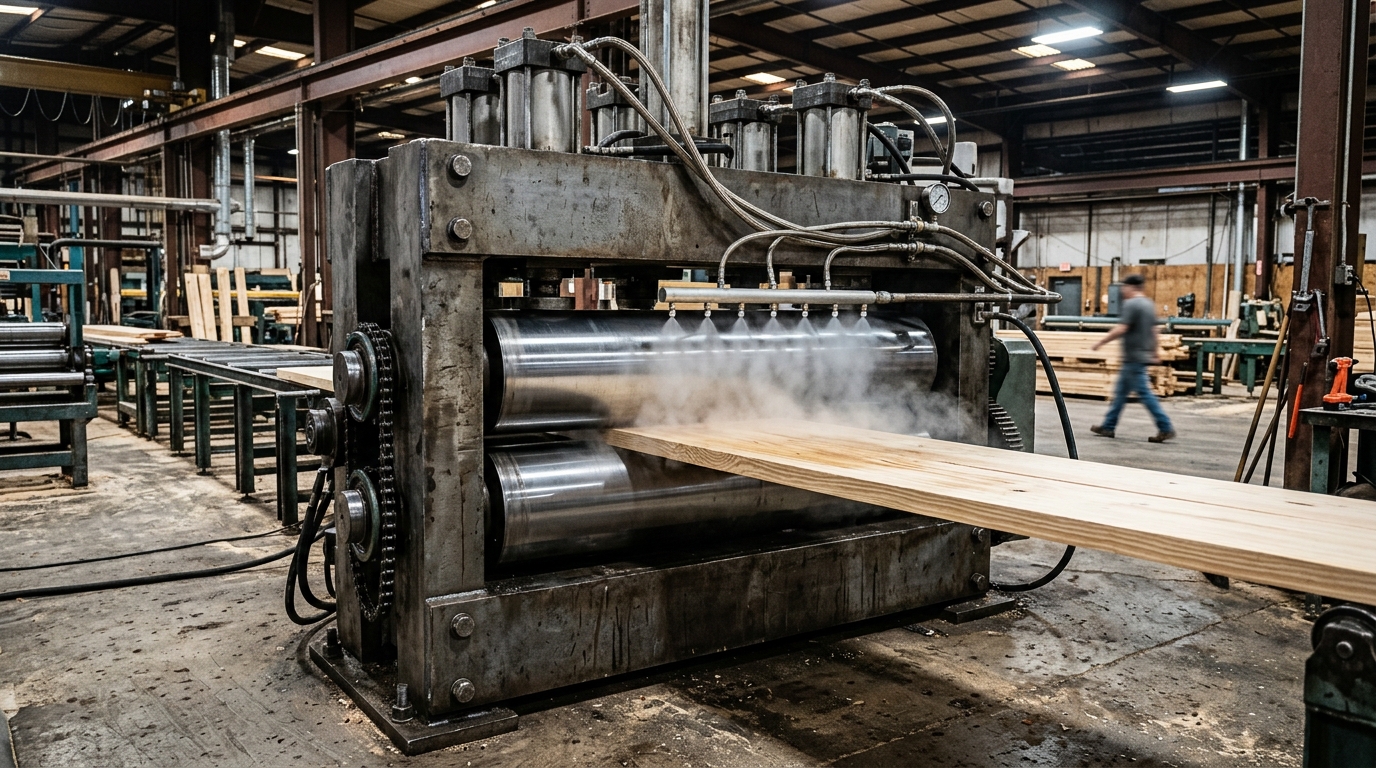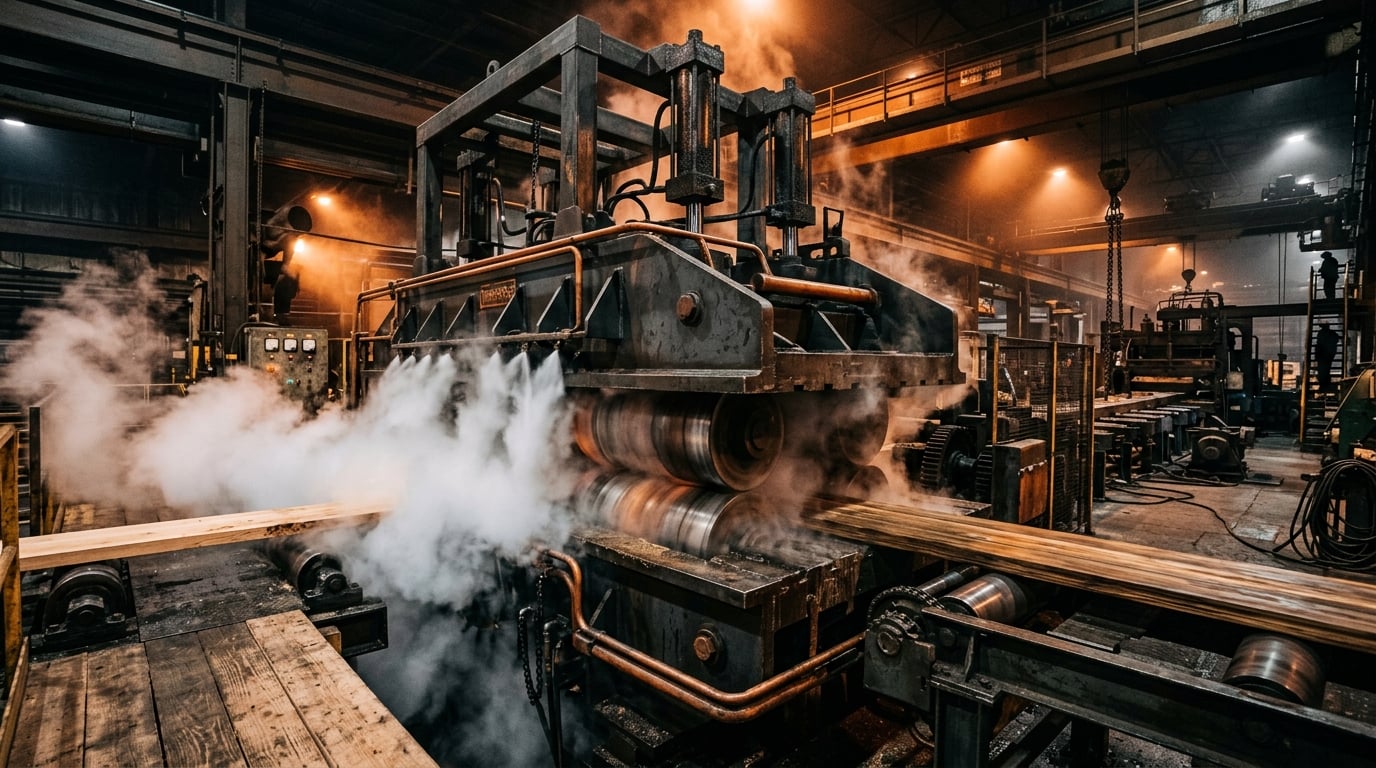
Industrial lumber rolling mill with two steel clamping plates, hydraulic cylinders, hot steam jets at the input, and cool rollers compressing a 2×6 board
Steam-Plasticized Roller Mill Technology

TimberSteel

A plate-bracket roller mill that crushes and hardens every standard lumber size sold in commerce — from 1×2 boards to 8×8 timbers — into steel-strength structural material.

Two massive steel plates clamp shut under 800-tonne hydraulic force. Superheated steam blasts the incoming board to plasticize the lignin, then cool rollers slowly draw it through the nip — emerging at 8× the original strength.

Strength Increase vs standard SPF
0+ Sizes 1×2 to 8×8 all commerce sizes
0% Renewable Source carbon-negative product
The Science

How Steam + Rollers Turn Wood Into Steel

A three-stage process: chemical pretreatment, hot-steam plasticization just before the rolling nip, and slow mechanical compression between cool rollers. Standard lumber goes in — hardened structural material comes out.

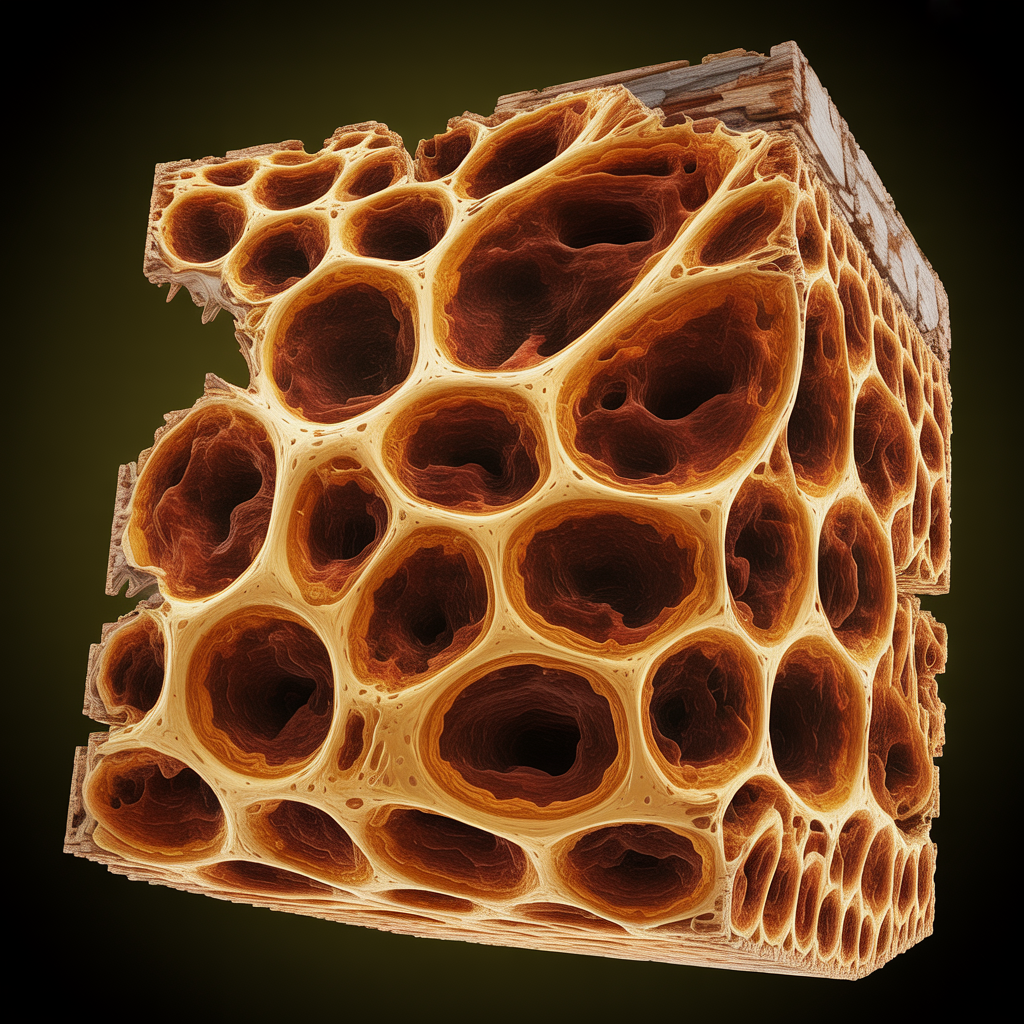
SEM microscope cross-section of densified wood showing compressed cellular structure after steam-plasticized roller mill treatment
SEM cross-section showing compressed cell walls after steam + roller treatment — lumen volume reduced 70%
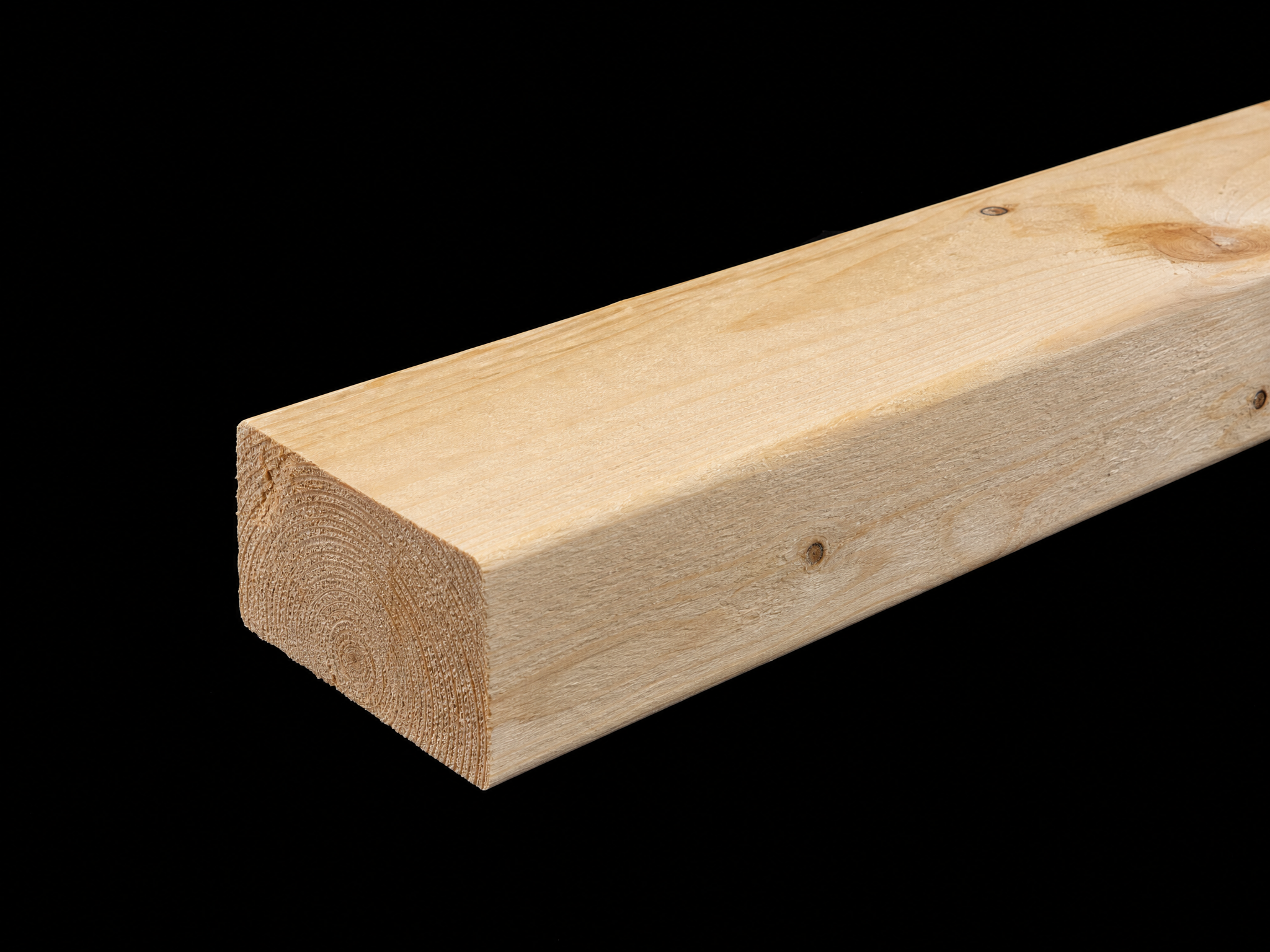
Standard untreated SPF lumber with natural light grain
Before — Standard SPF · 0.45 g/cm³
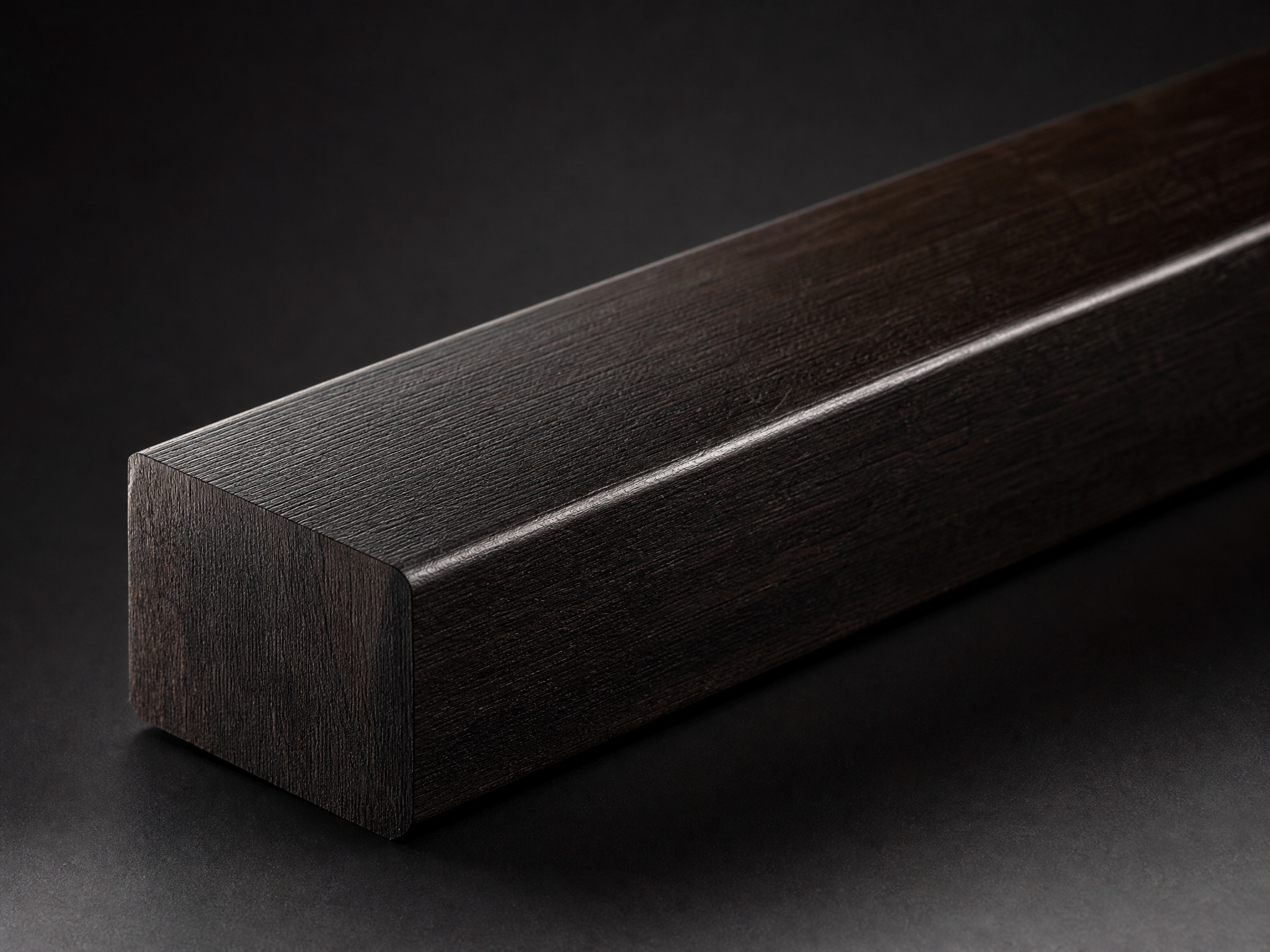
TimberSteel-hardened lumber with dense dark grain after steam-plasticized roller compression
After — Steam + Roller · 1.15 g/cm³

Partial Delignification

Standard SPF lumber is immersed in a NaOH/Na₂SO₃ solution that selectively removes lignin and hemicellulose. This softens the cell wall matrix, enabling deep densification when the board is later compressed in the roller mill.

Hot Steam Plasticization

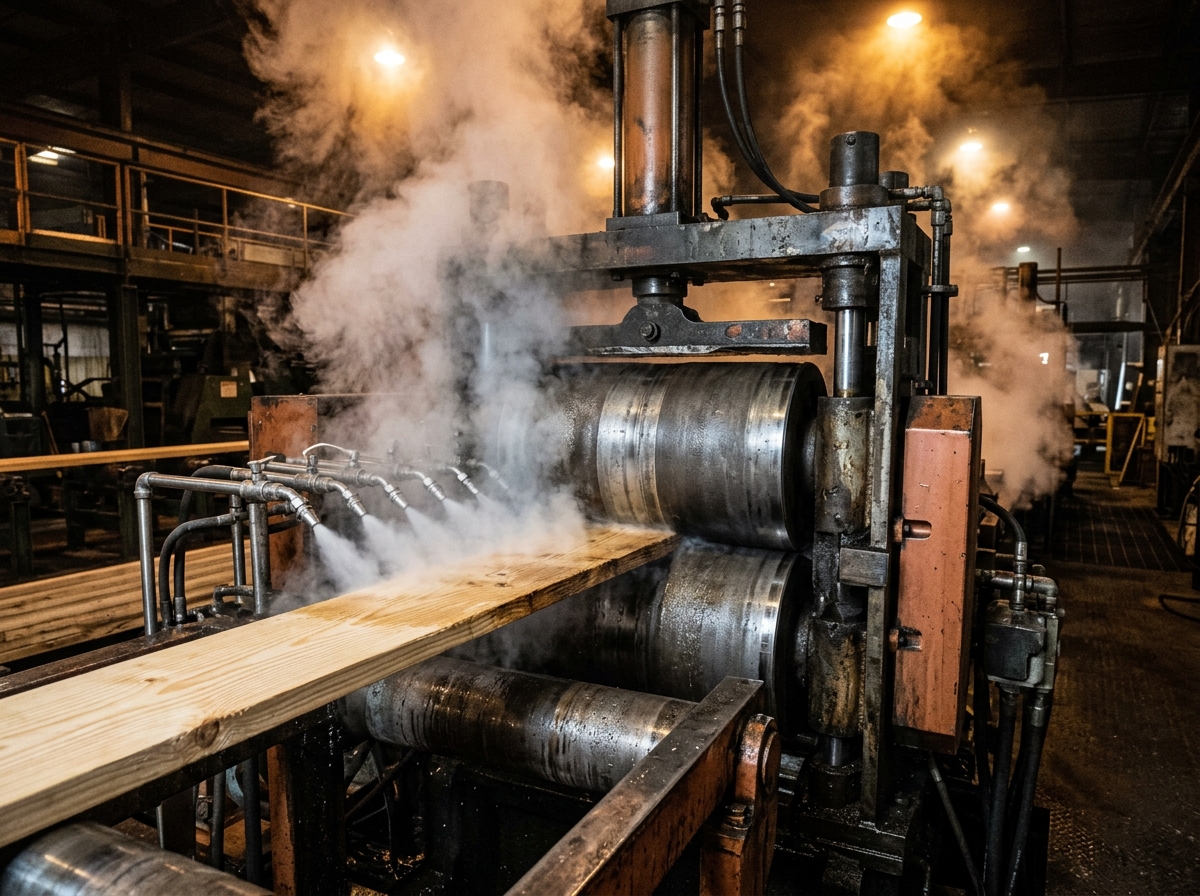
Just before the rolling nip, a stainless-steel manifold blasts the pretreated board with 170 °C superheated steam at 0.4 MPa. The vapor simultaneously delivers heat (to plasticize residual lignin) AND moisture (to swell cell walls) directly at the wood surface — no need to heat the rollers themselves.

Slow-Feed Penetration

Cool steel rollers slowly draw the steaming board through the nip at 0.3–1.2 m/min. The deliberately slow dwell time — 8 to 20 seconds under the steam jet — lets vapor diffuse through the full board thickness so lignin softens uniformly before the plates clamp down with 800 tonnes of hydraulic force.

Cellular Densification & Bond Formation

The clamped rollers collapse the wood's cell lumen by up to 70% while the softened cellulose nanofibers stack and form dense hydrogen-bond networks. A standard 2×4 enters at 0.45 g/cm³ and exits at 1.10–1.20 g/cm³ — approaching the theoretical cell-wall density of 1.5 g/cm³.

Performance Data

Standard Lumber vs. TimberSteel

Side-by-side comparison of roller-pressed TimberSteel lumber against standard SPF, Douglas Fir, aluminum, and structural steel.

0 100 200 300 400 MPa 40 SPF 65 Doug Fir 85 Oak 340 TimberSteel 310 Al 6061 400 Steel A36
0 1 2 3 4 5 6 7 8 g/cm³ 0.45 SPF 0.53 Doug Fir 0.71 Oak 1.15 TimberSteel 2.70 Aluminum 7.85 Steel
0 1K 2K 3K 4K 5K lbf (Janka) 690 SPF (Pine) 660 Doug Fir 1,360 Oak 3,510 Ipê 5,800 TimberSteel
Data from peer-reviewed roller-compression wood densification studies. Values represent single-pass through heated hydraulic rollers on pretreated SPF lumber.
Technical Specifications

Every Commerce Size Supported

From 1×2 boards to 8×8 timbers — the mechanical mill swallows every standard dimensional lumber size produced in North American commerce. Feed any board, get back a hardened one.

Boards
1× nominal — sheathing, trim, furniture stock
7 sizes
1×2
19 × 38 mm
0.75" × 1.5"
Compatible
1×3
19 × 64 mm
0.75" × 2.5"
Compatible
1×4
19 × 89 mm
0.75" × 3.5"
Compatible
1×6
19 × 140 mm
0.75" × 5.5"
Compatible
1×8
19 × 184 mm
0.75" × 7.25"
Compatible
1×10
19 × 235 mm
0.75" × 9.25"
Compatible
1×12
19 × 286 mm
0.75" × 11.25"
Compatible
Dimensional Lumber
2× nominal — studs, plates, joists, rafters
7 sizes
2×2
38 × 38 mm
1.5" × 1.5"
Compatible
2×3
38 × 64 mm
1.5" × 2.5"
Compatible
2×4
38 × 89 mm
1.5" × 3.5"
Compatible
2×6
38 × 140 mm
1.5" × 5.5"
Compatible
2×8
38 × 184 mm
1.5" × 7.25"
Compatible
2×10
38 × 235 mm
1.5" × 9.25"
Compatible
2×12
38 × 286 mm
1.5" × 11.25"
Compatible
Posts & Heavy Timber
4× and larger — columns, beams, post-and-beam
6 sizes
4×4
89 × 89 mm
3.5" × 3.5"
Compatible
4×6
89 × 140 mm
3.5" × 5.5"
Compatible
4×8
89 × 184 mm
3.5" × 7.25"
Compatible
6×6
140 × 140 mm
5.5" × 5.5"
Compatible
6×8
140 × 184 mm
5.5" × 7.25"
Compatible
8×8
184 × 184 mm
7.25" × 7.25"
Compatible
Property Unit SPF Doug Fir TimberSteel Al 6061 Steel A36
Densityg/cm³0.450.531.152.707.85
Tensile StrengthMPa4065340310400
Specific StrengthkN·m/kg8912329611551
Janka Hardnesslbf6906605,800
Modulus of ElasticityGPa8.913.43869200
Compression Ratio×2.5×
Moisture Absorption%/24h85721200
Dimensional Recovery%<3
Thermal ConductivityW/m·K0.120.140.3016750
Carbon Footprintkg CO₂/kg-1.8-1.7-1.48.11.9
Specific strength 6× higher than steel
20 standard commerce sizes — boards, dimensional, posts
Negative carbon footprint — sequesters CO₂
Machine Conception

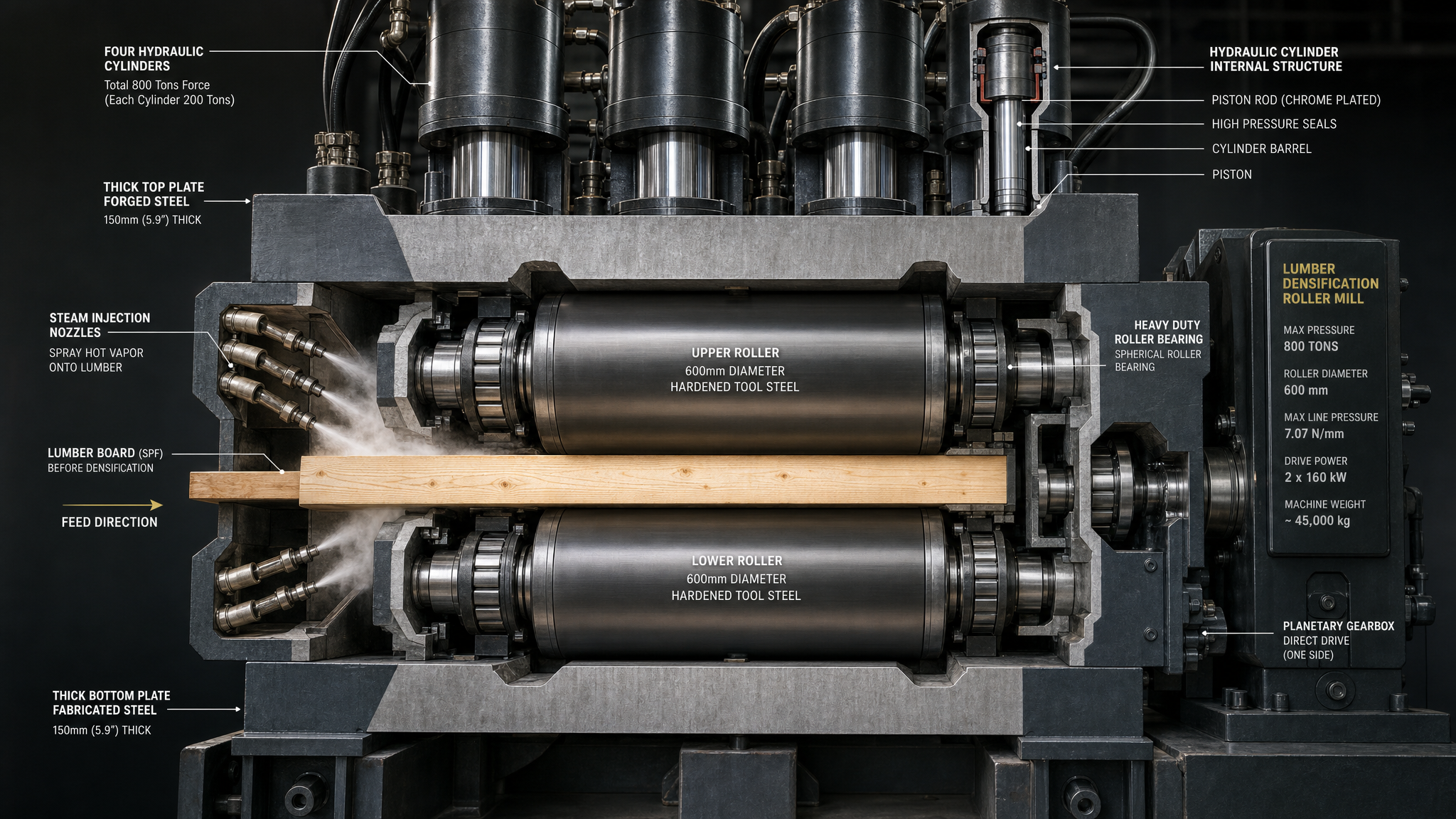
Plate-Bracket Roller Mill

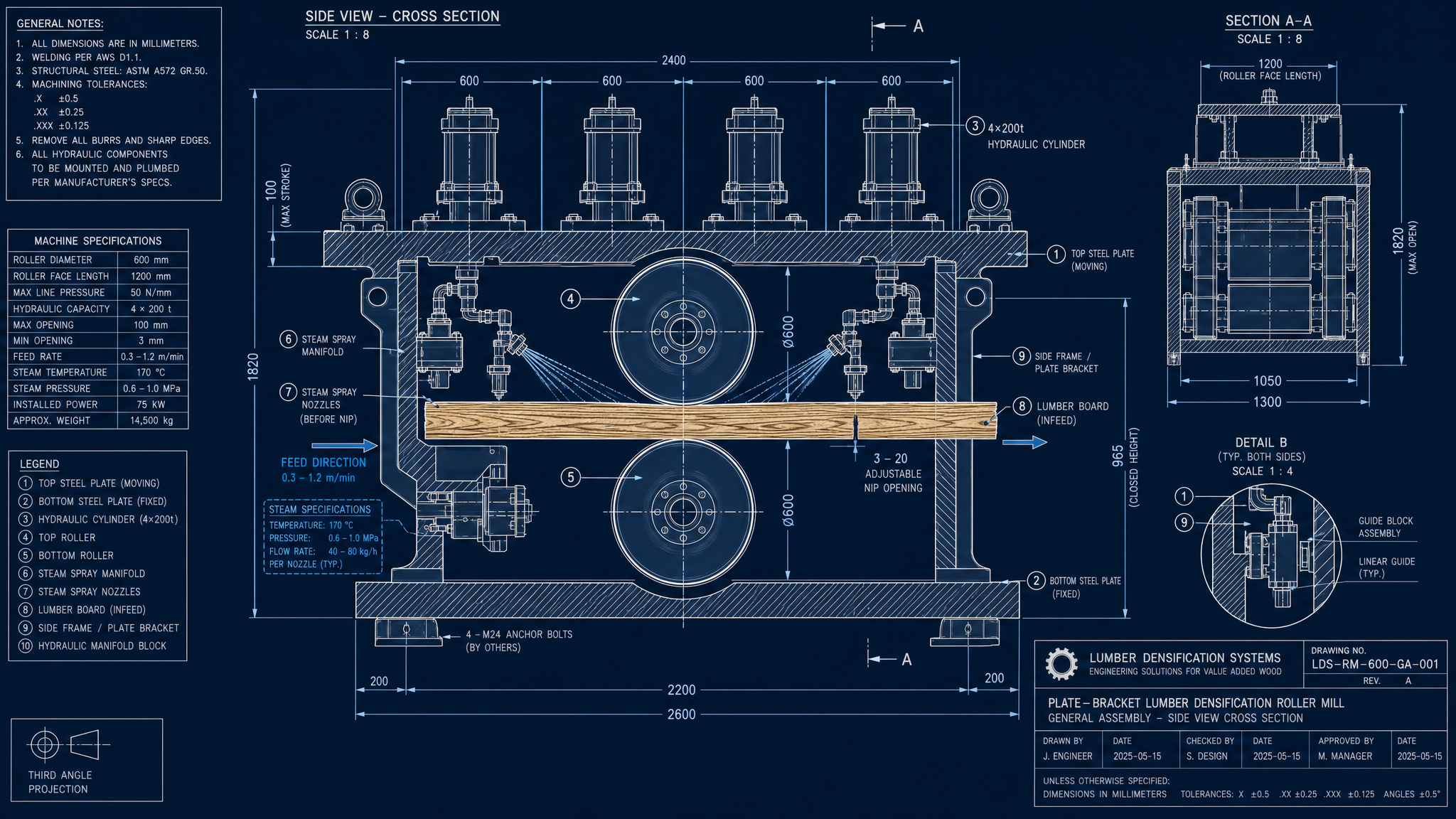
Two massive steel plates form a clamping bracket around the rolling zone. Hydraulic cylinders push the plates together; superheated steam pre-conditions the board just before it enters the cool rollers. The wood is fed slowly so the steam fully penetrates before the nip closes.

Engineering blueprint of TimberSteel plate-bracket roller mill showing top and bottom steel plates, hydraulic cylinders, steam injection manifold before the rollers, and lumber feed path
Interactive Blueprint — Plate-Bracket Roller Mill DWG-TS-RM-002 Rev.A
3.2 × 1.8 m
Footprint
600 mm
Roller Ø (cool)
8,500 kg
Weight
800 t
Press Force (4×200 t)
170 °C
Steam Temp · 0.4 MPa
0.3–1.2 m/min
Feed Rate

Two massive forged-steel plates form a closed bracket around the rolling zone. The top plate carries the upper roller, the bottom plate carries the lower roller. Hydraulic force is applied to the PLATES — not to the rollers — so the plates clamp the rollers together with absolute parallel alignment under load.

Forged steel, 18 t per plate
Parallel deflection <0.05 mm
Force applied at plates, not rollers

Four heavy-duty hydraulic cylinders mounted between the structural gantry and the top plate push it downward with up to 800 tonnes of total force. Because the cylinders push on cool steel plates — not on hot rollers — there is no thermal stress on seals or fluid. Pressure is held constant by a closed-loop servo-hydraulic system.

4 × 200 t cylinders, 800 t total
Closed-loop servo-hydraulic
Cool plate interface — no heat soak

A stainless-steel steam injection manifold positioned IMMEDIATELY BEFORE the roller nip blasts the entering board with 0.4 MPa superheated steam at 170 °C. The steam delivers both the heat needed to plasticize lignin AND the moisture needed for cellular collapse — in a single pass, just where the wood meets the rollers. All heating happens at the wood, not at the rollers.

Superheated steam: 170 °C, 0.4 MPa
Multi-nozzle full-width manifold
Heat delivered at point-of-contact

Two hardened tool-steel rollers (600 mm diameter, 400 mm face) are mounted in the plates and counter-rotate to pull the lumber through. The rollers themselves stay COOL — they never carry any heat. All the energy that softens the wood comes from the upstream steam spray. Cool rollers mean longer bearing life and zero thermal expansion of the nip gap.

600 mm × 400 mm hardened tool steel
Surface temperature: ambient
Counter-rotating drag drive

The rollers themselves act as the feed mechanism, pulling the lumber through at a deliberately SLOW pace — 0.3 to 1.2 m/min. This long dwell time under the steam jet ensures that vapor heats the wood through its full thickness and that water penetrates the cell walls before the compression nip clamps down. Speed varies automatically by board size.

Feed rate: 0.3–1.2 m/min
Dwell time under steam: 8–20 s
Auto-paced by board cross-section

Siemens S7-1500 PLC with HMI touchscreen coordinates hydraulic pressure, steam temperature/flow, roller speed, and dwell time. SIL-2 rated emergency stop, full-length roller guards, light curtains, steam relief valves, and torque-limit clutches that disengage the drive on overload.

SIL-2 E-stop, <100 ms brake
Light curtains + roller guards
Steam relief + torque limit
TimberSteel plate-bracket roller mill blueprint
TimberSteel plate-bracket roller mill 3D production unit
TimberSteel plate-bracket roller mill cross-section cutaway
Process Schema

From Lumber Yard to Steel-Grade

A five-stage industrial pipeline: chemical pretreatment, hot-steam plasticization, hydraulic plate-clamped roller densification, consolidation, and finishing.

01

Lumber Intake & Sizing

Material Selection

Standard commerce lumber — every nominal size from 1×2 boards to 8×8 timbers — is selected and sorted. Boards are verified for dimensional accuracy and moisture-equilibrated to 12% MC before processing.

Accepts: 1×2 through 8×8 · every standard size
02

Chemical Delignification

Pretreatment

Lumber boards are immersed in boiling NaOH/Na₂SO₃ solution (7% w/w) for 5–7 hours depending on cross-section thickness. This removes ~40% of lignin, softening the cell wall matrix so the wood can be deeply compressed by the rollers without fracturing.

100 °C | 5–7 h depending on board thickness
Chemical delignification treatment of lumber boards in industrial tank
03

Steam-Plasticized Roller Compression

Densification

The pretreated board enters the mill. A multi-nozzle manifold blasts 170 °C superheated steam onto the wood at 0.4 MPa just before the rolling nip — plasticizing lignin and saturating the cell walls. Two cool steel rollers, clamped between massive top and bottom plates by 800 t of hydraulic force, then slowly draw the wood through. The plates apply the load; the rollers stay cool; the steam carries all the heat.

170 °C steam | 800 t clamp | 0.3–1.2 m/min
Close-up of hot steam jets blasting a lumber board entering the cool rollers of the TimberSteel mill
04

Consolidation & Cooling

Stabilization

Hydrogen bonds form between exposed cellulose nanofibers at cell wall interfaces during and after roller compression. The board passes through a cooling zone where residual steam vents and the densified state locks in — preventing springback and ensuring dimensional stability for service.

Dimensional recovery: <3%
05

Hardened Lumber Output

Final Product

The resulting board achieves 1.10–1.20 g/cm³ density with tensile strength of ~340 MPa (approaching aluminum). Each board retains its nominal size profile and is graded, stamped, and ready for construction with standard nails, screws, drills, and saws.

Output: hardened standard lumber, any commerce size
Applications

Built for Real Construction

From 1×2 trim boards to 8×8 timbers — every standard commerce lumber size drops into existing construction workflows with dramatically improved performance.

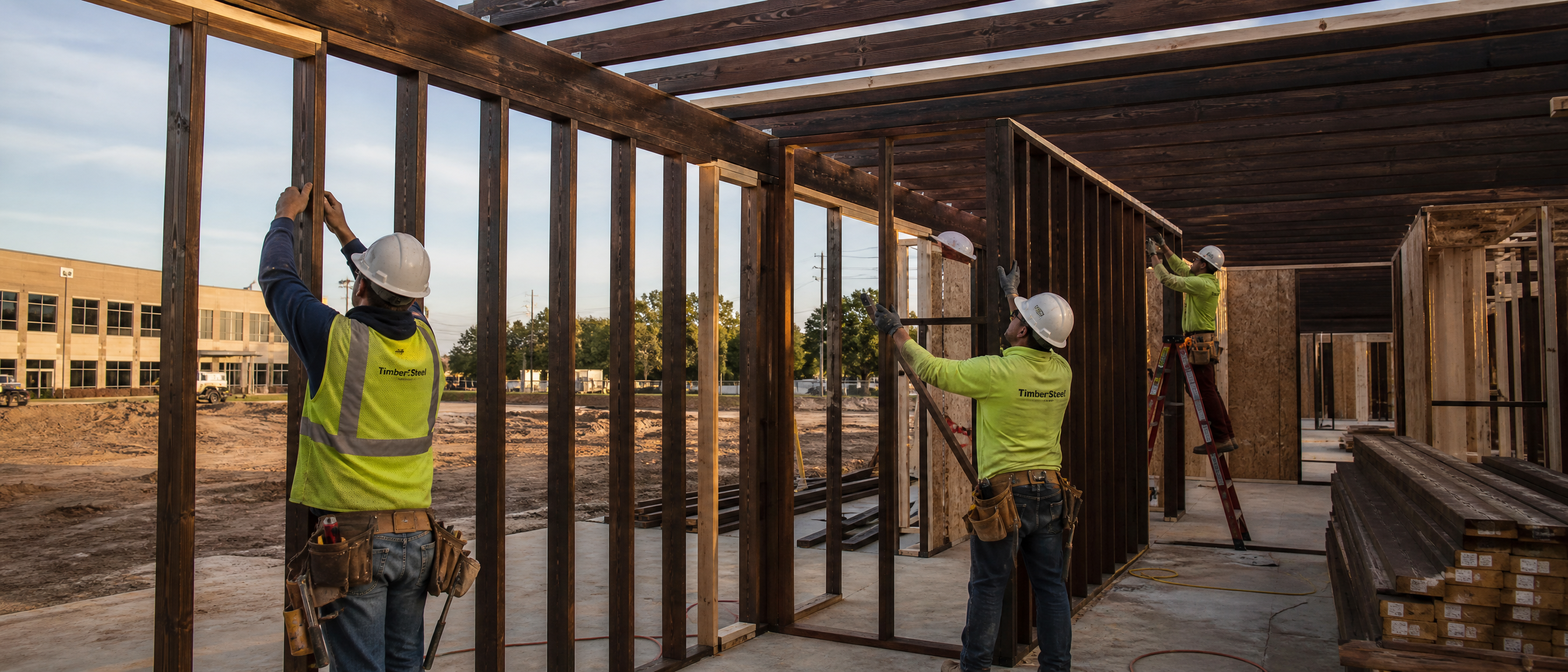
Construction site with workers installing TimberSteel-hardened dimensional lumber in building framing

Hardened lumber installed in standard framing — same tools, same fasteners, 8× the strength.

Structural Framing

Load-bearing wall studs, headers, and plates in any standard size — from 2×3 partition framing to 2×6 exterior walls. A TimberSteel 2×4 carries the same load as a steel stud — use standard nail-gun fastening, no special tools needed.

Drop-in stud replacement
Standard nail/screw fastening
8× strength vs SPF

Floor & Roof Joists

Hardened 2×8, 2×10, and 2×12 joists span greater distances with less deflection. Reduce joist count or increase spacing while maintaining code-compliant load ratings.

2×8 / 2×10 / 2×12 joists
60% stiffer than SPF
Reduced deflection

Exterior & Siding

Extreme moisture resistance (12% vs 85% absorption) makes hardened lumber ideal for exterior cladding. 1×4 through 1×12 boards, and 1×3 trim, with no pressure treatment chemicals needed — naturally rot and insect resistant after densification.

Moisture absorption: 12%
No chemical treatment
Rot/insect resistant

Decking & Fencing

1×4 to 2×6 decking and fencing lumber outlasts pressure-treated wood by 3× in outdoor applications. Janka hardness of 5,800 lbf means zero denting from furniture, foot traffic, or weather impacts.

Janka: 5,800 lbf
3× lifespan vs PT lumber
No annual sealing

Posts & Heavy Timber

Hardened 4×4, 4×6, 6×6, 6×8 and 8×8 posts and beams for structural columns, pergolas, and post-and-beam construction. The mechanical mill handles thick cross-sections with full-depth densification — up to 8×8 in a single pass.

4×4 to 8×8 — six post sizes
Full-depth hardening
CNC machinable

Sustainable Construction

Every TimberSteel board retains a negative carbon footprint (−1.4 kg CO₂/kg). Replace steel studs, aluminum framing, or concrete components with renewable, carbon-sequestering hardened lumber.

Carbon negative: −1.4 kg CO₂/kg
95% renewable source
Fully recyclable